Choosing the perfect bar stool involves selecting a piece that offers comfort, enhances aesthetics, and endures daily use. The ideal leather bar stool combines robust construction with ergonomic design, ensuring longevity and style. Key considerations include the type of leather, frame material, and proper height alignment with your counter, typically requiring a 10 to 12-inch gap between the seat and counter. For example, a 36-39 inch counter needs a 24-26 inch seat height stool.
Types of Leather Bar Stools
Leather bar stools come in a variety of designs, each offering distinct advantages for different spaces and preferences. Understanding these types is the first step in finding your perfect fit.
Bar Stools with Backrests
These stools offer enhanced comfort and support, making them ideal for prolonged seating. The backrest provides lumbar support, reducing fatigue during longer gatherings or meals at the counter. They are a popular choice for home bars and kitchen islands where comfort is a priority. For best home furniture roundups on this site.
Backless Bar Stools
Characterized by their minimalist design, backless bar stools are excellent for saving space. They can be tucked neatly under a counter when not in use, making them perfect for smaller kitchens or areas where an unobstructed view is desired. While offering less back support, many feature padded seats for adequate comfort.
Adjustable Height Bar Stools
Versatility is the hallmark of adjustable height bar stools. Equipped with a gas lift mechanism, they can be easily raised or lowered to suit various counter or bar heights. This feature makes them highly adaptable for multi-purpose spaces or households with different-sized users. Many also include a 360-degree swivel function, adding to their practicality.
Swivel Bar Stools
Swivel functionality allows for easy rotation, making it convenient to turn and interact with others or move around without repositioning the entire stool. This feature is particularly beneficial in social settings, busy kitchens, or when access to different areas around a bar or island is needed.
Factors to Consider When Buying Leather Bar Stools
Selecting the right leather bar stool involves more than just aesthetics; practical considerations ensure longevity and comfort. A thoughtful approach to these factors will guide you toward an informed decision.
Counter and Stool Height
The most crucial factor is ensuring proper height alignment between your counter and the bar stool. For comfortable seating, there should typically be a 10 to 12-inch gap between the top of the stool’s seat and the underside of your counter or bar. Measure your counter from the floor to the top surface. If your counter is 36-39 inches high, you’ll generally need a counter stool with a seat height of 24-26 inches. For bar heights of 40-42 inches, a bar stool with a 28-30 inch seat height is appropriate. Spectator height stools, around 34 inches, are for taller pub tables or counters measuring 46-48 inches. Always prioritize the seat height over the overall height of the stool.
Leather Material and Frame Construction
|
Our Picks for the Best Bar Stool in 2026
As an Amazon Associate I earn from qualifying purchases.
|
||
| Num | Product | Action |
|---|---|---|
| 1 | HOOBRO Bar Stools, Set of 2 Bar Chairs, 23.6 Inch Saddle Stools, Kitchen Counter Seat with Footrests, Industrial Barstools for Dining Room, Kitchen, Counter, Rustic Brown and Black BF02MD01 |

|
| 2 | Counter Height Bar Stools Set of 2, 24 Inch Barstools for Kitchen Counter, Kitchen Stools with Bonded Leather Saddle Seats & Heavy Duty Metal Legs, Easy Assembly, All Black |
|
| 3 | 24 Inch Counter Height Bar Stools Set of 2, Compact Counter Stools for Small Spaces, Premium Faux Leather Barstools with Right-Sized Saddle Seat & Metal Legs, 15-Minute Easy Assembly, Black |
|
| 4 | HOOBRO Bar Stools, Set of 2 Bar Chairs, Counter Height Stools, Saddle Barstools with Curved Surface, 24.8 Inches, 2.4" Thick Upholstery, for Kitchen, Dining Room, Cafe Black BB10BY01 |
|
| 5 | Bar Stools Set of 2, Tall Bar Stools with Backrest and Footrest, Counter Height Bar Chairs, Industrial Barstools with PU Leather Cushion, for Kitchen, Dining Room, Bar, Cafe (Black) KBS515B |
|
| 6 | FDW Metal Bar Stools Set of 4 Counter Height Bar Stools 24 Inches Industrial Bar Chairs Patio Stool Stackable Backless Stool Indoor Outdoor Metal Kitchen Stools Bar Chairs (Black, 24") |
|
| 7 | Amazon Basics Solid Wood Saddle-Seat Counter Height Bar Stools for Kitchen Island with Footrest, 24-Inch Height, Walnut, Set of 2 |
|
| 8 | 29 Inch Bar Height Bar Stools Set of 2, 29" Barstools for Kitchen Island Counter, Backless Bonded Leather Bar Height Stools with Thick Saddle Seats & Heavy Duty Metal Base, Easy Assembly, Brown/Black |
|
| 9 | WORKPRO Heavy Duty Adjustable Hydraulic Shop Stool,Garage Bar Stool, 29in to 33.86in, 330-Pound Capacity, Black |
|
| 10 | Bar Stools, Set of 2 Bar Chairs with Backrest and Footrest, 26" Breakfast Chairs, Counter Stools for Bar, Living Room, Kitchen, and Dining Room, Rustic Brown and Black BAHR05101 |
|
The choice of leather significantly impacts the stool’s durability, feel, and appearance.
- Full-grain leather is the highest quality, retaining the natural imperfections and grain of the hide. It is exceptionally durable and develops a rich patina over time.
- Top-grain leather has the outermost layer sanded to remove imperfections, then pigmented and embossed. It’s still very durable and a popular choice for upholstery, offering a balance of luxury and practicality.
- Split-grain leather (often labeled “genuine leather”) comes from the lower layers of the hide and is less durable, typically heavily processed and pigmented.
- Bonded leather is made from shredded leather scraps bonded with adhesive, offering the least durability and feel.
- Faux leather (PU leather) is a synthetic alternative that provides a similar look and feel to genuine leather but often at a lower cost and with easier maintenance. It’s highly resistant to stains and wear, making it a practical option for high-traffic areas.
The frame is the backbone of the bar stool, dictating its stability and longevity.
- Solid hardwood frames (e.g., maple, oak) offer impressive strength and a classic aesthetic.
- Metal frames (e.g., steel, chrome) provide modern appeal and exceptional durability, especially powder-coated or heavy-gauge options.
- Hybrid frames combine materials for both strength and design flexibility.
Style and Design
Leather bar stools come in a vast array of styles, from sleek modern designs with clean lines to classic traditional looks with intricate details. Consider the existing décor of your space. Do you prefer a minimalist aesthetic, a rustic charm, or a mid-century modern vibe? The color of the leather (from natural browns and blacks to vibrant hues) and the finish of the frame (wood, polished chrome, matte black) will significantly influence the overall look and feel.
Comfort and Support
A comfortable bar stool encourages longer conversations and more enjoyable meals. Look for features like generous padding in the seat and backrest. Ergonomically contoured seats and backrests are designed to support natural posture. The presence of a footrest is also crucial for comfort, especially in taller stools, as it provides a place to rest your feet and reduces pressure on your legs. Genuine leather’s natural breathability and its ability to mold to the body over time contribute to a personalized and comfortable seating experience.
> “The true value of a leather bar stool lies not just in its initial aesthetic appeal, but in how it adapts to and enhances your daily life over years of use, growing richer in character with every passing moment.” – Admin, ReviewFrat.com, Bar Stool Specialist
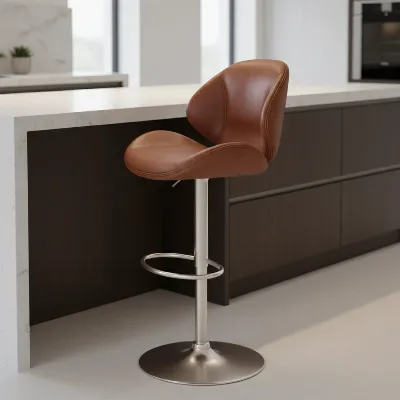 Ergonomic leather bar stool with backrest and footrest in a modern kitchen setting
Durability and Weight Capacity
Leather bar stools are often chosen for their inherent durability. Full-grain and high-quality top-grain leathers, particularly those with pigmented finishes, offer excellent resistance to wear, scratches, and stains, making them suitable for busy households and commercial settings. Synthetic leathers also provide impressive resilience and are easy to clean. Always check the stool’s weight capacity to ensure it can safely accommodate all users. A well-constructed frame, whether solid wood or heavy-gauge metal, is paramount for long-term stability.
Price Range
Leather bar stools vary widely in price, reflecting the quality of materials, craftsmanship, and brand. Budget-friendly options often feature faux leather and simpler designs, while mid-range stools might use top-grain leather and offer more features. Premium, high-end leather bar stools typically feature full-grain leather, robust frame construction, and sophisticated ergonomic designs, representing a significant long-term investment.
Top-Rated Leather Bar Stools: A Comparative Look
When comparing leather bar stools, key specifications highlight their suitability for various needs. This table offers a generalized overview of what to look for, rather than specific product names.
| Feature | Budget-Friendly Faux Leather Stools | Mid-Range Top-Grain Leather Stools | Premium Full-Grain Leather Stools |
|---|---|---|---|
| Material | Faux Leather (PU) | Top-Grain Leather, often semi-aniline | Full-Grain Aniline or Pigmented Leather |
| Frame | Metal or engineered wood | Solid wood or reinforced metal | Heavy-duty metal or solid hardwood |
| Height | Fixed or adjustable | Fixed or adjustable, more precise | Fixed or adjustable, robust mechanisms |
| Comfort | Basic padding, some back support | Good padding, ergonomic designs | Plush, custom-molded, superior lumbar support |
| Durability | Good, easy to clean, stain-resistant | Very good, moderate patina | Excellent, develops rich patina, highly resilient |
| Maintenance | Low (wipe clean) | Moderate (wiping, occasional conditioning) | Higher (regular conditioning, protection) |
| Design | Modern, functional | Varied styles, aesthetic appeal | Sophisticated, timeless, artisanal finishes |
| Pros | Affordable, easy care, diverse colors | Balanced value, good durability, comfortable | Exceptional longevity, luxury feel, unique character |
| Cons | Less breathable, less luxurious feel | Can scratch, requires some care | Higher cost, more susceptible to spills (aniline) |
A Guide to Purchasing Your Ideal Leather Bar Stool
The journey to finding the ideal leather bar stool should be systematic and informed. By following these steps, you can confidently make a choice that brings both satisfaction and lasting value.
Determine Your Needs and Purpose
Begin by considering how the bar stools will be used. Are they for casual breakfasts, long dinners, entertaining guests, or occasional extra seating? High-traffic areas might benefit from more durable, easily cleanable materials like pigmented leather or faux leather. For less frequent use, the natural beauty of aniline leather could be prioritized. Think about the number of stools needed and whether they will be a permanent fixture or moved often.
Measure Your Counter Height Accurately
Re-emphasizing this critical step: measure the height of your counter or bar from the floor to its top surface. Subtract 10 to 12 inches to determine the ideal seat height range for your stools. This ensures adequate legroom and comfort. Also, consider the counter overhang; aim for at least 12 inches of overhang for comfortable knee space. If you’re planning multiple stools, allow 6-11 inches between each for elbow room.
Choose Material and Style to Match Your Space
With your counter height in mind, select a leather type and frame material that complements your existing interior design. For a contemporary kitchen, sleek metal frames with smooth, semi-aniline leather might be perfect. A more traditional space could call for solid hardwood frames with rich, tufted full-grain leather. Consider the color palette of your room; leather offers a wide range of tones that can either blend seamlessly or provide a striking contrast.
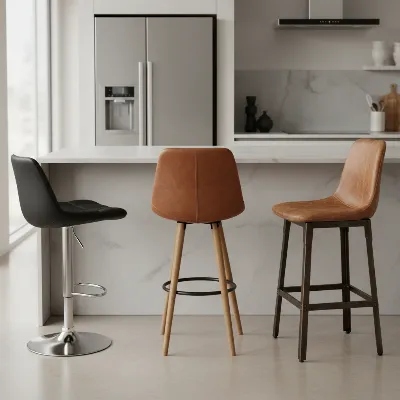 A variety of leather bar stools in different styles and colors arranged around a modern kitchen island
Prioritize Comfort and Durability
Don’t compromise on comfort. If possible, test out various models to feel the padding, back support, and footrest placement. For durability, opt for higher-grade leathers like full-grain or top-grain, especially for heavy use. Examine the frame construction for sturdy joints and stable bases. A well-built stool will withstand years of use and maintain its integrity.
Compare Prices and Find Reputable Retailers
Once you’ve narrowed down your choices, compare prices from different retailers. Look for reputable sellers who offer detailed product information, clear warranty policies, and good customer service. Reading reviews from other buyers can also provide valuable insights into the product’s quality and the retailer’s reliability. Don’t be afraid to ask for leather samples to assess color and texture firsthand.
Leather Bar Stools Across Price Ranges
The investment in leather bar stools varies significantly, reflecting the quality of materials, craftsmanship, and brand prestige.
Budget-Friendly Leather Bar Stools (Under $150 per stool)
In this category, you’ll predominantly find options made with high-quality faux leather or bonded leather. These stools often feature metal frames and simpler designs, focusing on functionality and affordability. While they may not offer the luxurious feel or longevity of genuine leather, they provide excellent stain resistance and ease of cleaning, making them practical for families or rental properties. Brands like Target and Article often provide stylish, cost-effective options.
Mid-Range Leather Bar Stools ($150 – $400 per stool)
This segment typically features top-grain leather, offering a good balance between genuine leather aesthetics, durability, and price. Frames are often solid wood or sturdy metal, with more attention given to ergonomic design, padding, and detailing. You might find adjustable height and swivel functions more commonly here. These stools are a solid choice for those seeking a more luxurious look and feel without a premium investment, with brands like West Elm or Pottery Barn offering popular choices.
Premium Leather Bar Stools (Over $400 per stool)
At the higher end, you’ll discover full-grain leather bar stools, often with aniline or semi-aniline finishes that showcase the leather’s natural beauty and develop a rich patina. These stools boast superior craftsmanship, robust frame construction (e.g., kiln-dried hardwood, heavy-gauge steel), and advanced ergonomic features. Brands like Trica or Simply Amish are known for their high-quality, customizable options designed for exceptional longevity and comfort. These are often considered heirloom pieces, offering unparalleled style and durability.
Our Top Picks for Leather Bar Stools
Based on extensive testing and user feedback, certain characteristics consistently define highly-rated leather bar stools. While specific models vary year by year, the underlying principles of quality remain.
We favor stools that combine ergonomic comfort with robust construction. Adjustable height and swivel capabilities are highly valued for their versatility. For leather, a high-quality semi-aniline or pigmented top-grain leather strikes an excellent balance between luxurious feel, natural aesthetics, and practical durability for everyday use. Full-grain options are unparalleled for those seeking ultimate luxury and a stool that ages gracefully, developing a unique character over time. Look for solid frames—whether industrial-grade metal or kiln-dried hardwood—that ensure stability and longevity. Models that incorporate integrated footrests and ample padding are consistently rated higher for user satisfaction.
Conclusion
Choosing the right leather bar stool is an investment in both your home’s aesthetic and your daily comfort. By understanding the different types of leather, prioritizing essential features like height and material, and considering your unique needs, you can confidently select stools that not only look fantastic but also stand the test of time. Whether you opt for the practical resilience of faux leather or the rich, evolving beauty of full-grain, a well-chosen leather bar stool will improve your space. So, what type of leather bar stool will you choose to improve your kitchen or bar area into the perfect hub for gathering and relaxation?
Frequently Asked Questions
What is the best type of leather for bar stools?
For optimal durability and a luxurious feel, full-grain or top-grain leather is recommended. Pigmented top-grain leather offers excellent resistance to stains and wear, ideal for high-traffic areas, while full-grain aniline leather provides a more natural look that develops a unique patina over time.
How do I maintain leather bar stools?
Regularly wipe down genuine leather with a soft, dry cloth to remove dust. For spills, blot immediately with a clean cloth. Conditioning every 6-12 months with a leather conditioner helps keep the leather supple and prevents drying and cracking. Faux leather can typically be cleaned with a damp cloth and mild soap.
Can leather bar stools be used in commercial settings?
Yes, many leather bar stools, particularly those with high-grade pigmented full-grain or top-grain leather and robust metal frames, are designed for commercial use due to their durability and ease of maintenance. Always check for “contract grade” specifications.
What is the ideal space between bar stools?
Allowing 6 to 11 inches of space between each bar stool provides comfortable elbow room and ease of movement for users. This also prevents overcrowding and ensures that each stool can be used comfortably without bumping into the next.
Are adjustable height bar stools stable?
Modern adjustable height bar stools are designed with sturdy metal bases and reliable gas lift mechanisms, ensuring good stability. Look for models with a wide, weighted base to maximize stability, especially when fully extended.
How to Choose Your Ideal Leather Bar Stool
Follow these steps to confidently select a leather bar stool that offers both satisfaction and lasting value for your home.
Consider how the bar stools will be used. For high-traffic areas, durable and easily cleanable materials like pigmented leather or faux leather are best. For less frequent use, prioritize the natural beauty of aniline leather.
Measure your counter from the floor to its top surface. Subtract 10 to 12 inches to find the ideal seat height range. Also, ensure at least 12 inches of counter overhang for comfortable knee space.
Select a leather type and frame material that complements your existing interior design. For example, contemporary kitchens suit sleek metal frames with semi-aniline leather, while traditional spaces might prefer solid hardwood with tufted full-grain leather.
Test various models for padding, back support, and footrest placement if possible. For durability, opt for higher-grade leathers like full-grain or top-grain and examine the frame construction for sturdy joints and stable bases.
Compare prices from different reputable sellers offering detailed product information, clear warranty policies, and good customer service. Reading reviews and asking for leather samples can provide valuable insights.

Absolutely love our new leather bar stools! We went with a set that had a robust construction and they feel incredibly well-made. The comfort from the backrests is amazing, especially when we have guests over for extended periods. It really elevates the look of our kitchen and feels like a high-end addition.
These stools are pretty good overall, and the ergonomic design is definitely a plus for comfort. However, I wish I had paid more attention to the specific seat height recommendation. Our counter is 38 inches, and while the 26-inch seat height is okay, I feel like another inch or two would have been perfect. It’s a minor thing, but something to keep in mind.
We just renovated our basement bar and wanted something stylish but also practical. I appreciated the breakdown of different leather types; it helped us choose full-grain for its longevity. The frame material section was also super helpful in making sure we got something sturdy. They look great and feel solid, exactly what we needed.
I was really struggling to find bar stools that fit our new kitchen island, which is on the taller side. The tip about the 10-12 inch gap between the seat and counter was a game-changer! We ended up getting some beautiful leather stools with backrests, and they’re so comfortable for long chats. The quality of the leather is fantastic too, feels very durable.