You can revitalize wooden bar stools with paint without sanding by thoroughly cleaning and deglossing the surface, then applying a quality bonding primer and suitable paint. This method saves time and effort, especially for intricate designs, and achieves a durable, stylish finish. The process involves using heavy-duty cleaners like Trisodium Phosphate (TSP) or Krud Kutter, followed by a chemical deglosser to prepare the surface for optimal paint adhesion.
Why Skip the Sanding? The No-Prep Advantage for Bar Stools
The thought of painting furniture often conjures images of laborious sanding, dust clouds, and hours spent preparing the surface. However, advancements in paint technology and surface preparation products have made it entirely possible to bypass this step, particularly for items like wooden bar stools. Skipping the sanding saves significant time and effort, makes cleanup a breeze, and is especially beneficial for pieces with detailed carvings, spindles, or hard-to-reach areas where traditional sanding would be cumbersome. The key lies in creating a chemically prepared surface that allows paint to adhere strongly and last for years, without compromising on durability.
Essential Preparations: Cleaning and Deglossing Your Bar Stools
A pristine surface is paramount for successful paint adhesion, even when foregoing sanding. Begin by thoroughly cleaning your wooden bar stools to remove all traces of dirt, grease, grime, and any built-up residue. For this, a heavy-duty cleaner like Trisodium Phosphate (TSP) or Krud Kutter works exceptionally well. Mix the cleaner according to package directions and, wearing durable gloves, scrub the entire surface of each stool. Afterwards, wipe down the stools with clean water to remove any lingering film from the cleaner. This step ensures your primer and paint have a clean foundation to bond with.
Once clean, the next critical step is deglossing, which acts as “liquid sandpaper.” A chemical deglosser effectively dulls the existing finish, creating a receptive surface for paint without the physical abrasion of sanding. Apply the deglosser with a clean, lint-free rag, using circular motions and applying pressure, much like you would with soap and water. Always wear protective gloves and a mask when working with these chemicals. Allow the deglosser to dry completely according to the product’s instructions, which can range from 10 minutes to several hours depending on temperature and coat thickness. The surface should feel dull and slightly chalky. Before proceeding, wipe down the stools one final time with a damp cloth to remove any residual deglosser. Remember to remove any hardware, such as footrests or decorative elements, before you begin the cleaning and deglossing process to ensure full coverage and a cleaner finish.
> “The secret to painting without sanding isn’t magic; it’s meticulous cleaning and the power of a good deglosser. These steps lay the groundwork for a finish that truly lasts.” – Admin, ReviewFrat.com, Bar Stool Expert
Choosing the Right Arsenal: Primers and Paints for No-Sanding Projects
|
Our Picks for the Best Bar Stool in 2026
As an Amazon Associate I earn from qualifying purchases.
|
||
| Num | Product | Action |
|---|---|---|
| 1 | Bar Stools Set of 2, Tall Bar Stools with Backrest and Footrest, Counter Height Bar Chairs, Industrial Barstools with PU Leather Cushion, for Kitchen, Dining Room, Bar, Cafe (Black) KBS515B |

|
| 2 | HOOBRO Bar Stools, Set of 2 Bar Chairs, 23.6 Inch Saddle Stools, Kitchen Counter Seat with Footrests, Industrial Barstools for Dining Room, Kitchen, Counter, Rustic Brown and Black BF02MD01 |
|
| 3 | Counter Height Bar Stools Set of 2, 24 Inch Barstools for Kitchen Counter, Kitchen Stools with Bonded Leather Saddle Seats & Heavy Duty Metal Legs, Easy Assembly, All Black |
|
| 4 | 29 Inch Bar Height Bar Stools Set of 2, 29" Barstools for Kitchen Island Counter, Backless Bonded Leather Bar Height Stools with Thick Saddle Seats & Heavy Duty Metal Base, Easy Assembly, Brown/Black |
|
| 5 | Bar Stools, Set of 2 Bar Chairs with Backrest and Footrest, 26" Breakfast Chairs, Counter Stools for Bar, Living Room, Kitchen, and Dining Room, Rustic Brown and Black BAHR05101 |
|
| 6 | WORKPRO Heavy Duty Adjustable Hydraulic Shop Stool,Garage Bar Stool, 29in to 33.86in, 330-Pound Capacity, Black |
|
| 7 | 24 Inch Counter Height Bar Stools Set of 2, Compact Counter Stools for Small Spaces, Premium Faux Leather Barstools with Right-Sized Saddle Seat & Metal Legs, 15-Minute Easy Assembly, Black |
|
| 8 | Amazon Basics Solid Wood Saddle-Seat Counter Height Bar Stools for Kitchen Island with Footrest, 24-Inch Height, Walnut, Set of 2 |
|
| 9 | HOOBRO Bar Stools, Set of 2 Bar Chairs, Counter Height Stools, Saddle Barstools with Curved Surface, 24.8 Inches, 2.4" Thick Upholstery, for Kitchen, Dining Room, Cafe Black BB10BY01 |
|
| 10 | FDW Metal Bar Stools Set of 4 Counter Height Bar Stools 24 Inches Industrial Bar Chairs Patio Stool Stackable Backless Stool Indoor Outdoor Metal Kitchen Stools Bar Chairs (Black, 24") |
|
Selecting the correct primer and paint is crucial for a no-sanding project. The right products will ensure excellent adhesion and a long-lasting finish on your wooden bar stools.
Primers for Superior Adhesion
Even if your chosen paint claims to be “all-in-one,” a quality bonding primer is highly recommended. A good primer acts as an adhesive layer between the existing finish and your new paint, enhancing durability and preventing chipping or peeling, especially for frequently used items like bar stools. Look for bonding primers specifically designed for challenging surfaces. Popular choices include Kilz bonding primer and Zinsser Oil-Based primer, both known for their excellent adhesion properties. If you plan to use a dark topcoat color, opt for a deep base primer in a similar shade; this will reduce the number of paint coats needed, saving you time and money. Always verify that your chosen primer is compatible with the heavy-duty cleaner you used in the preparation stage, as some primers may struggle to adhere to surfaces treated with certain chemicals. Apply one even coat of primer and allow it to dry completely, typically for several hours or overnight, depending on environmental conditions.
Paints That Perform Without Sanding
Several paint types are suitable for no-sanding projects:
- Chalk Paint: Renowned for its “no-prep” reputation, chalk paint often adheres well to various surfaces without sanding or priming. It provides a unique matte finish, but typically requires a protective topcoat of wax or polycrylic for durability, particularly on high-traffic items like bar stools. The color palette can be more limited compared to other paint types.
- Latex Paint: This is a versatile and widely available option with a vast array of colors and finishes (satin, semi-gloss, gloss). For wooden bar stools, a semi-gloss or gloss finish often proves most durable and easiest to clean. When using latex paint, a quality bonding primer is essential for maximum adhesion and a long-lasting result.
- All-in-One Paints (Mineral or Milk Paints with Bonding Agents): Some brands offer “all-in-one” formulas that claim to combine primer, paint, and topcoat. While these can simplify the process, it’s wise to test them in an inconspicuous area first, as their adhesion and durability without a separate primer can sometimes be less reliable for high-use furniture. If opting for milk paint, ensure it’s specifically formulated with a bonding agent.
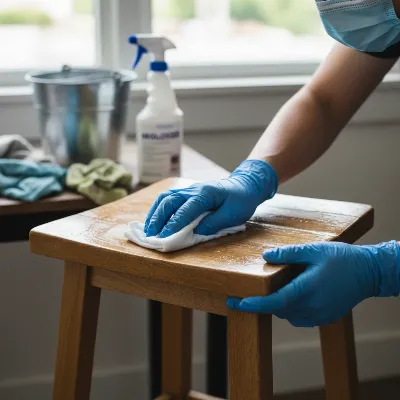 A person wearing gloves and a mask, wiping a wooden bar stool with a deglosser liquid, surrounded by cleaning supplies.
Application Techniques for a Flawless Finish
Achieving a smooth, professional-looking finish on your bar stools requires careful application. The tools you choose and how you use them will significantly impact the final result.
For broad, flat surfaces like bar stool seats, high-density foam rollers are excellent for achieving a smooth, even coat with minimal texture. For intricate areas, spindles, and corners, a high-quality angled paintbrush (1.5-inch to 2-inch) will provide precision and control. If you’re working on multiple stools or desire an ultra-smooth, factory-like finish, a paint sprayer can be a game-changer, especially for challenging areas like spindles, which are notoriously difficult to paint without brush marks.
Regardless of your chosen tool, the key is to apply multiple thin coats rather than one thick coat. Thin coats dry faster, reduce the risk of drips, and build a more durable, even finish. When using spray paint, adopt a “start off, spray on, end off” technique: begin spraying just before the stool, move across the surface in a smooth, continuous motion, and release the nozzle after you’ve passed the edge. This prevents paint build-up and ensures an even application. Allow each coat to dry completely before applying the next; impatiently adding a second coat too soon can lead to cracking or peeling. If you notice any brush marks, avoid overworking the paint as it begins to dry; trying to smooth it out too much can often make the marks more pronounced.
The Finishing Touch: Protecting Your Painted Bar Stools
Once your bar stools are beautifully painted, adding a protective topcoat or sealant is highly recommended, especially since bar stools are high-traffic items prone to spills, scuffs, and frequent use. This final layer significantly boosts durability, making your painted finish last longer and easier to clean.
When selecting a sealant, ensure it is compatible with your chosen paint type. Generally, water-based sealants (like polycrylic) work best over water-based paints, while oil-based sealants pair with oil-based paints. Be aware that oil-based sealants can sometimes cause white or very light-colored paints to yellow over time. If you’ve used chalk paint, a clear wax sealant is a traditional choice that provides a soft, durable finish. Apply the sealant in thin, even coats, allowing ample drying time between each application, as recommended by the manufacturer. For optimal protection, especially on a bar stool’s seat or footrests, two to three coats of sealant are ideal.
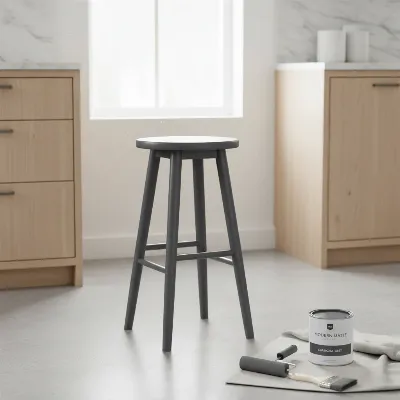 A beautifully painted wooden bar stool with painting tools nearby, showcasing a smooth, refreshed finish.
Conclusion
Transforming your wooden bar stools with paint without the arduous task of sanding is not only possible but also a highly rewarding DIY project. By following a methodical approach that emphasizes thorough cleaning, effective deglossing, and the strategic use of quality primers and paints, you can achieve a durable, attractive finish. This no-sanding method streamlines the process, allowing you to update your home decor with less mess and more confidence. So, gather your supplies, embrace the ease of this technique, and give your wooden bar stools the fresh, new look they deserve. Are you ready to pick up your brush and revitalize your space?
Frequently Asked Questions
Can you really paint any wood bar stool without sanding?
Yes, most wooden bar stools can be painted without sanding by using a heavy-duty cleaner and a chemical deglosser to prepare the surface. Following this with a high-quality bonding primer ensures strong paint adhesion. This method is effective for various wood types and finishes.
How durable is a no-sanding paint job on bar stools?
A no-sanding paint job can be very durable when proper cleaning, deglossing, and priming steps are followed, and a durable paint (like latex with a topcoat or sealed chalk paint) is used. Adding a protective topcoat or sealant, such as polycrylic, is essential for high-traffic items like bar stools to enhance longevity and resist wear.
What kind of primer is best for painting wood without sanding?
A quality bonding primer is crucial for painting wood without sanding. Look for primers specifically designed for slick or hard-to-adhere-to surfaces, such as Kilz bonding primer or Zinsser Oil-Based primer. These primers create a strong, adhesive base for your paint to stick to, preventing chipping and peeling.
How do I avoid brush marks when painting without sanding?
To minimize brush marks, use high-density foam rollers for flat surfaces and good quality angled brushes (1.5-inch to 2-inch) for details. Apply paint in multiple thin, even coats, and avoid overworking the paint as it starts to dry. A paint sprayer can also help achieve an exceptionally smooth, factory-like finish.
Is a topcoat necessary when painting bar stools without sanding?
While some all-in-one paints claim to eliminate the need for a topcoat, it is highly recommended for bar stools. Bar stools experience significant wear and tear, and a protective sealant or topcoat, applied in two to three thin coats, will drastically improve the durability, chip resistance, and longevity of your painted finish.

Great tips for updating bar stools. I appreciated the advice on using a bonding primer; that really helped with adhesion on my old, glossy stools. The finish is holding up well, even with daily use. My only minor complaint is that finding TSP locally was a bit of a hassle, but it was worth it in the end.
I was so intimidated by the idea of painting my old bar stools because of all the sanding. This guide was a lifesaver! I used Krud Kutter as suggested, and it really made a difference in getting the surface ready. The paint went on so smoothly afterwards, and they look brand new without all the dust and mess.
I tried the no-sanding method on my kitchen bar stools, and while it saved time, I did notice a few spots where the paint didn’t adhere perfectly, even after using the chemical deglosser. It’s mostly fine for a quick refresh, but for a really flawless finish, I might still consider a light sand next time. Still, it’s a good option if you’re in a hurry.
This method for revitalizing wooden bar stools is genius! I have some intricate designs on my stools, and the thought of sanding them was enough to put me off the project for months. Skipping the sanding entirely made this a weekend project instead of a week-long ordeal. They look fantastic and the paint is super durable.