A wobbly bar stool can be quickly fixed at home by identifying the source of the instability and applying targeted repairs, such as tightening loose fasteners, leveling uneven legs, or reinforcing worn joints. Most common issues can be resolved in under an hour using basic household tools like screwdrivers, Allen keys, and wood glue, restoring comfort and safety to your seating.
Identifying the Source of the Wobble
Before you grab any tools, the first crucial step is to pinpoint exactly where the wobble originates. Sometimes, what seems like a complex structural issue is simply a loose connection or an uneven surface. Start by placing the bar stool on a perfectly flat, level surface, like a workbench or a section of flooring you know is even. Gently rock the stool from side to side and front to back. Pay close attention to any movement, creaks, or shifts. Is it the entire stool rocking on the floor, indicating uneven legs or an issue with the base? Does the seat itself move independently from the frame? Are the legs flexing where they meet the seat or the footrest? This initial diagnosis will guide your repair efforts and save you time. Common culprits include loose screws, uneven legs, compromised joints, or even an uneven floor beneath the stool.
Essential Tools for Bar Stool Repair
Before diving into repairs, gather the necessary tools. Having these on hand will streamline the process and ensure you can tackle most common issues efficiently. You won’t need an elaborate workshop, just a few household staples:
- Screwdrivers: Both Phillips head and flathead will be useful for various types of fasteners.
- Allen Keys (Hex Wrenches): Many modern bar stools use hex bolts for assembly. A set of these will be indispensable.
- Adjustable Wrench: For tightening nuts and bolts.
- Rubber Mallet (or a regular hammer with a cloth): Handy for gently persuading components into place without damage.
- Wood Glue: Essential for reinforcing loose wooden joints.
- Clamps: To hold glued joints securely while they dry.
- Felt Pads or Rubber Caps: For leveling uneven legs or replacing worn floor protectors.
- Level Tool: To accurately check for uneven surfaces or legs.
- Rags or Paper Towels: For cleaning up excess glue or grime.
Step-by-Step Guide to Fixing Your Wobbly Bar Stool
Once you’ve identified the source of the wobble and gathered your tools, follow these steps to bring stability back to your bar stool.
1. Address Loose Fasteners
Loose screws and bolts are, by far, the most common reason for a wobbly bar stool. Over time, regular use, shifting weight, and even minor vibrations can cause fasteners to loosen.
- Inspection: Turn the bar stool upside down to easily access all screws, bolts, and connecting hardware. Carefully inspect every joint, paying particular attention to where the legs attach to the seat frame, where the footrest connects to the legs, and any other structural connections.
- Tightening: Use the appropriate screwdriver or Allen key to tighten every single screw and bolt you find. Don’t just tighten the ones that feel obviously loose; go over all of them. When tightening, do so in a crisscross or gradual pattern, tightening each screw a little bit at a time rather than fully tightening one before moving to the next. This ensures even tension across the joint and prevents putting undue stress on other parts of the frame.
- Recheck: Once all fasteners are tightened, turn the stool upright and test for stability. Many wobbles will disappear after this simple step.
2. Correct Uneven Legs
|
Our Picks for the Best Bar Stool in 2026
As an Amazon Associate I earn from qualifying purchases.
|
||
| Num | Product | Action |
|---|---|---|
| 1 | Bar Stools, Set of 2 Bar Chairs with Backrest and Footrest, 26" Breakfast Chairs, Counter Stools for Bar, Living Room, Kitchen, and Dining Room, Rustic Brown and Black BAHR05101 |

|
| 2 | 29 Inch Bar Height Bar Stools Set of 2, 29" Barstools for Kitchen Island Counter, Backless Bonded Leather Bar Height Stools with Thick Saddle Seats & Heavy Duty Metal Base, Easy Assembly, Brown/Black |
|
| 3 | 24 Inch Counter Height Bar Stools Set of 2, Compact Counter Stools for Small Spaces, Premium Faux Leather Barstools with Right-Sized Saddle Seat & Metal Legs, 15-Minute Easy Assembly, Black |
|
| 4 | Amazon Basics Solid Wood Saddle-Seat Counter Height Bar Stools for Kitchen Island with Footrest, 24-Inch Height, Walnut, Set of 2 |
|
| 5 | FDW Metal Bar Stools Set of 4 Counter Height Bar Stools 24 Inches Industrial Bar Chairs Patio Stool Stackable Backless Stool Indoor Outdoor Metal Kitchen Stools Bar Chairs (Black, 24") |
|
| 6 | Bar Stools Set of 2, Tall Bar Stools with Backrest and Footrest, Counter Height Bar Chairs, Industrial Barstools with PU Leather Cushion, for Kitchen, Dining Room, Bar, Cafe (Black) KBS515B |
|
| 7 | HOOBRO Bar Stools, Set of 2 Bar Chairs, 23.6 Inch Saddle Stools, Kitchen Counter Seat with Footrests, Industrial Barstools for Dining Room, Kitchen, Counter, Rustic Brown and Black BF02MD01 |
|
| 8 | HOOBRO Bar Stools, Set of 2 Bar Chairs, Counter Height Stools, Saddle Barstools with Curved Surface, 24.8 Inches, 2.4" Thick Upholstery, for Kitchen, Dining Room, Cafe Black BB10BY01 |
|
| 9 | WORKPRO Heavy Duty Adjustable Hydraulic Shop Stool,Garage Bar Stool, 29in to 33.86in, 330-Pound Capacity, Black |
|
| 10 | Counter Height Bar Stools Set of 2, 24 Inch Barstools for Kitchen Counter, Kitchen Stools with Bonded Leather Saddle Seats & Heavy Duty Metal Legs, Easy Assembly, All Black |
|
If tightening fasteners doesn’t resolve the wobble, the issue might be uneven legs. This is particularly common on older floors or stools that have been dragged frequently.
- Identify the short leg: Place the stool on a known flat surface. If it still wobbles, apply gentle pressure to each leg to identify the one that isn’t making full contact with the floor. You can also use a level tool to confirm.
- Temporary Fixes: For minor discrepancies, self-adhesive felt pads or rubber caps are your best friends. Stick one or more layers of felt pad to the bottom of the shorter leg until the stool is level. For significant gaps, specialized furniture leg levelers or thicker rubber caps can be used.
- Permanent Solution (for wooden legs): If you’re confident with woodworking tools, you can carefully trim the longer legs to match the shortest one. However, this is a more advanced fix and should only be attempted if you have the right tools and experience.
3. Reinforce Worn Joints (for wooden stools)
For wooden bar stools, especially older ones, the joints where legs meet stretchers or the seat frame can become loose or develop gaps.
- Disassembly (if necessary): If the joint is significantly loose, you may need to carefully disassemble the problematic section.
- Apply Wood Glue: Apply a generous amount of strong wood glue into the loose joint. Ensure the glue penetrates any gaps.
- Clamp and Dry: Reassemble the joint, ensuring it’s square and flush. Use clamps to hold the joint tightly together while the glue dries completely, typically overnight. Wipe away any excess glue immediately with a damp cloth.
- Add Cross Bracing: For added durability, especially in older or heavily used stools, consider installing small metal corner braces under the seat or between the legs. These provide extra structural support and can prevent future wobbles.
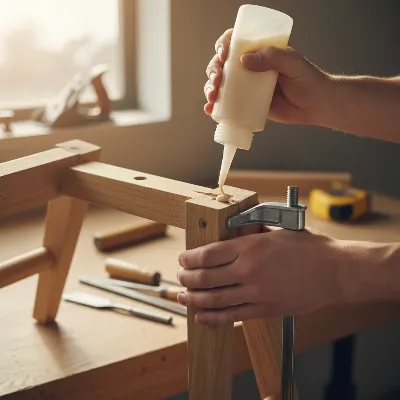 Expert hands applying wood glue to a loose bar stool joint with a clamp securing it
4. Inspect the Floor and Base Protectors
Sometimes, the bar stool itself isn’t the problem; it’s the surface it rests on. Uneven floors can mimic a wobbly stool, and damaged floor protectors can exacerbate the issue.
- Check Your Floor: Use a level tool to check the floor surface where your bar stool sits. If it’s uneven, try moving the stool to a different spot or placing a mat underneath to provide a more uniform surface.
- Examine Base Protectors: Many bar stools, especially those with solid round or square bases, have rubber rings or felt pads on the underside to protect the floor and provide stability. Over time, these can become misaligned, worn, or even fall off. Realign any buckled rubber rings, or use a strong adhesive to reattach loose felt pads. Replace any severely worn or missing pads immediately.
5. Troubleshoot Swivel and Gas Lift Mechanisms
For bar stools with swivel seats or adjustable gas lift mechanisms, the wobble might stem from these specialized components.
- Swivel Mechanism: If the seat swivels but also wobbles, the swivel plate might be loose. Turn the stool upside down and examine the screws that secure the swivel plate to both the seat and the column. Tighten any loose screws with a screwdriver or adjustable wrench. If the mechanism is damaged, you might need to replace the entire swivel plate, which is a relatively simple process involving unbolting the old one and securing a new one.
- Gas Lift Bushing: Hydraulic or gas lift bar stools have an internal plastic lining, often called a “bush” or “bushing,” that helps ensure smooth movement and prevents metal-on-metal contact between the column and footrest. If this bush becomes loose or falls out, it can cause significant wobble. Carefully inspect the column where it enters the footrest. If the bush is dislodged, you can often re-secure it with a small amount of glue or silicone, applied sparingly to avoid restricting movement. If it’s damaged or missing, a replacement bush might be needed.
> “A wobbly bar stool isn’t just an annoyance; it’s a safety concern. Most issues are easily remedied with a keen eye and the right basic tools, transforming a shaky seat into a reliable one in under an hour.” – Alex Chen, Furniture Restoration Specialist
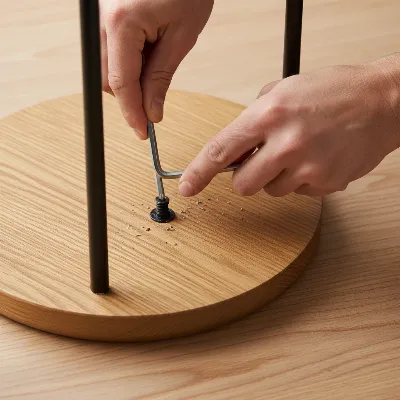 A person tightening screws on a bar stool leg with an Allen key, focused on DIY repair.
Preventative Maintenance for Stable Bar Stools
Once you’ve successfully fixed your wobbly bar stool, taking a few proactive steps can prevent future instability and extend its lifespan.
- Regular Checks: Make it a habit to periodically inspect your bar stools (perhaps every 3-6 months). Give them a quick rock and tighten any fasteners that feel even slightly loose.
- Proper Usage: Avoid dragging bar stools across the floor, as this can damage floor protectors and stress joints. Instead, lift and reposition them. Also, discourage excessive rocking or leaning, which puts undue strain on the frame and fasteners.
- Level Surfaces: Always try to keep your bar stools on a level surface. If you have uneven flooring, continue using floor pads or a mat to maintain stability.
- Avoid Overloading: Be mindful of the weight capacity of your bar stools. Exceeding recommended limits can lead to structural fatigue and wobbling.
Conclusion
Dealing with a wobbly bar stool can be a nuisance, but as we’ve explored, the solutions are often simple, affordable, and well within the capabilities of a home DIY enthusiast. By systematically identifying the source of the wobble—whether it’s loose fasteners, uneven legs, worn joints, or issues with the base or swivel mechanism—and applying the right fix, you can quickly restore your bar stool to perfect stability. Regular maintenance, such as tightening screws and checking floor pads, will ensure your bar stools remain reliable and comfortable for years to come. So, the next time you encounter a shaky seat, remember that a stable bar stool is just a few simple steps away. What’s the most common cause of wobbly bar stools in your experience?
Frequently Asked Questions
What causes a bar stool to wobble?
A bar stool can wobble for several reasons, including loose screws or bolts in the frame, uneven legs, worn-out joints, issues with the floor surface it sits on, or problems with the swivel or gas lift mechanism. Heavy usage over time and improper assembly are common contributing factors.
Can I fix a wobbly bar stool without any tools?
While some minor wobbles caused by an uneven floor can be temporarily fixed with a folded piece of cardboard or a rug, most structural wobbles require basic tools like screwdrivers, Allen keys, or wrenches to tighten fasteners or reinforce joints. It’s best to have a small toolkit for effective repairs.
How often should I check my bar stools for wobbling?
It’s a good practice to check your bar stools for wobbling every three to six months, or whenever you notice any instability. Regular inspection and tightening of fasteners can prevent minor issues from escalating into more significant repairs.
When should I consider replacing a wobbly bar stool instead of fixing it?
You should consider replacing a wobbly bar stool if the frame is severely cracked, parts are bent beyond repair, critical components like the swivel mechanism or gas lift are extensively damaged and costly to replace, or if multiple attempts at repair have failed to restore stability. Sometimes, the cost of parts and your time might outweigh the value of the stool.
Frequently Asked Questions
What are the most common causes of a wobbly bar stool?
The most common causes of a wobbly bar stool include loose screws or bolts in the frame, uneven legs, worn-out joints, or issues with the floor surface. Heavy usage and improper assembly are significant contributing factors to instability.
What basic tools are needed to fix a wobbly bar stool?
To fix a wobbly bar stool, you will typically need screwdrivers (Phillips and flathead), Allen keys, an adjustable wrench, and possibly wood glue and clamps for wooden joints. Felt pads or rubber caps are also useful for leveling uneven legs.
How frequently should I perform maintenance checks on my bar stools?
It is recommended to check your bar stools for wobbling every 3 to 6 months. Regular inspection and tightening of fasteners can prevent minor issues from becoming more significant problems and extend the lifespan of your stools.
When is it better to replace a bar stool rather than attempting a repair?
You should consider replacing a bar stool if its frame is severely cracked, parts are bent beyond repair, or critical components like the swivel mechanism are extensively damaged and costly to replace. If multiple repair attempts fail to restore stability, replacement might be more practical.
Can an uneven floor cause a bar stool to appear wobbly?
Yes, an uneven floor can definitely make a bar stool appear wobbly, even if the stool itself is structurally sound. Always test the stool on a known flat surface first, and use a level tool to check the floor where the stool typically sits.
Fix a Wobbly Bar Stool
This guide provides step-by-step instructions to identify and fix common causes of instability in bar stools, restoring their stability and safety.
Place the bar stool on a flat surface and gently rock it to pinpoint where the wobble originates. Common culprits include loose fasteners, uneven legs, or compromised joints. This initial diagnosis guides your repair efforts.
Turn the stool upside down and use appropriate screwdrivers or Allen keys to tighten all screws and bolts. Tighten in a crisscross pattern to ensure even tension across joints. Recheck stability after this step, as it often resolves most wobbles.
If the stool still wobbles, identify the short leg on a flat surface. Apply self-adhesive felt pads or rubber caps to the bottom of the shorter leg until the stool is level. For wooden legs, careful trimming of longer legs can be a permanent solution.
For wooden stools with loose joints, apply strong wood glue into the gaps. Use clamps to hold the joint tightly together while the glue dries completely, typically overnight. Consider adding metal corner braces for extra durability.
Check the floor surface for unevenness using a level tool. Examine the bar stool's base protectors (rubber rings or felt pads); realign, reattach, or replace any that are worn or missing. This ensures stability and protects your flooring.

Fantastic advice! I had a couple of bar stools that were driving me crazy with their constant rocking. The suggestion to place them on a perfectly flat surface to pinpoint the wobble was genius. Turns out, it was just a couple of loose screws I hadn’t noticed. Quick fix, and now they’re solid as a rock.
I was ready to throw out my favorite bar stools because they were so wobbly, but this guide saved them! The tip about tightening loose fasteners with an Allen key was exactly what I needed. It took me less than 15 minutes to fix all three of my stools, and now they feel brand new. So glad I didn’t have to buy a whole new set.
This was super helpful for my kitchen island stools. I thought I’d need some fancy tools, but just a screwdriver and some wood glue did the trick for reinforcing the worn joints. The instructions for identifying the source of the wobble were really clear and made the whole process much easier than I expected. They’re much more stable now.
My bar stool still has a slight wobble even after trying to level the uneven legs. I followed the steps carefully, but it seems like the issue might be a bit more complex than just a simple adjustment. It’s definitely better than before, but not perfectly stable. Maybe I need to try the wood glue next.