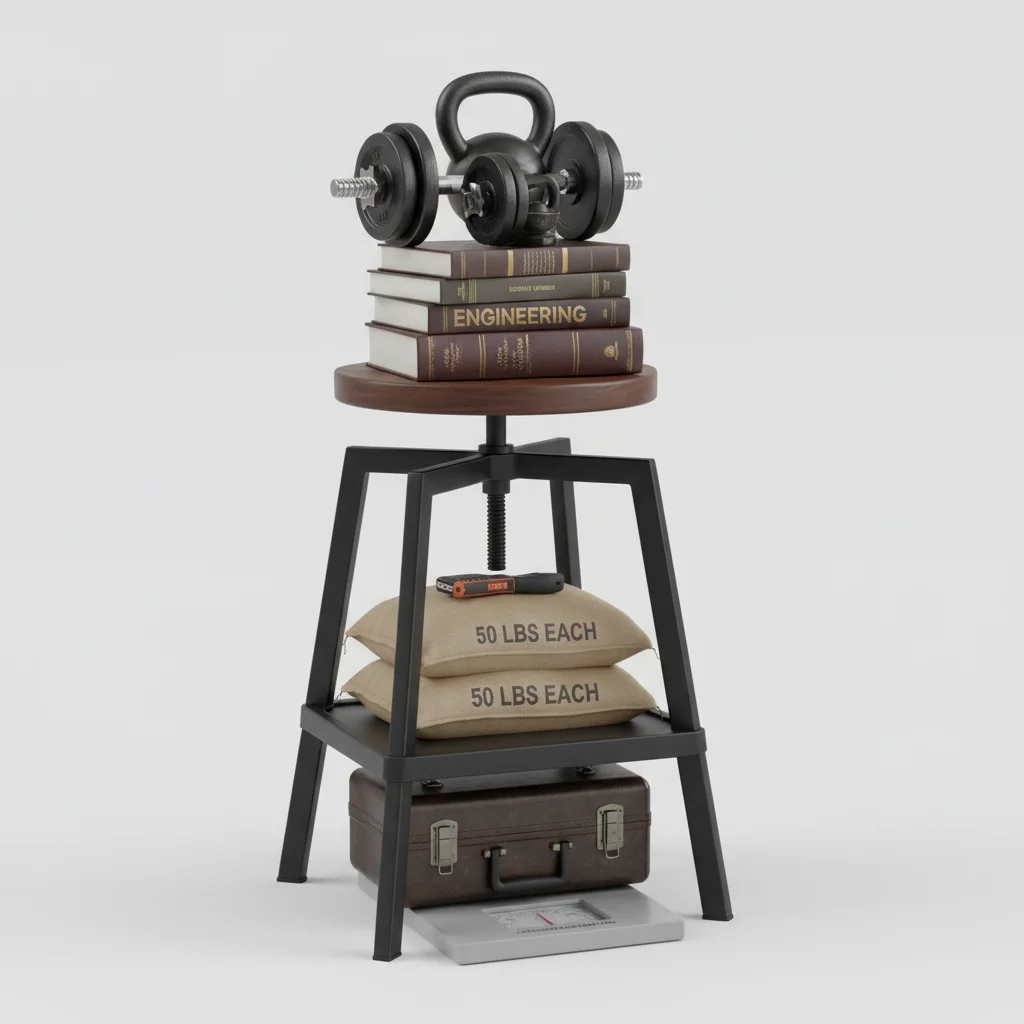
Understanding the weight capacity of bar stools is crucial for safety and longevity. Most standard bar stools are designed to safely support between 250 and 300 pounds. However, heavy-duty models can accommodate up to 500 pounds, while some specialized designs might have lower limits. This guide will help you navigate the various weight ratings and ensure you choose the right stools for your needs.
Why Bar Stool Weight Capacity Matters
The structural integrity of a bar stool is directly tied to its weight capacity. Exceeding this limit can lead to immediate failure, causing injury, or gradual weakening of the frame, leading to premature wear and tear. Manufacturers rigorously test their products to determine these limits, which are influenced by the materials used, the construction method, and the overall design. Always check the product specifications before purchasing.
Factors Influencing Weight Capacity
Several elements contribute to a bar stool’s ability to bear weight. The frame material is paramount; steel and solid hardwood frames generally offer higher capacities than aluminum or particleboard. The thickness and gauge of the material also play a significant role. Furthermore, the joinery methods—welded joints, mortise and tenon, or reinforced screws—greatly impact stability. A wider base and a well-distributed load design also contribute to a higher weight rating.
- Solid steel or hardwood frames provide superior strength.
- Reinforced joints and sturdy construction enhance durability.
- Wider bases improve stability and weight distribution.
- Quality hardware and fasteners prevent loosening over time.
- Manufacturer testing ensures accurate weight ratings.
Identifying Heavy-Duty Bar Stools
|
Our Picks for the Best Bar Stool in 2026
As an Amazon Associate I earn from qualifying purchases.
|
||
| Num | Product | Action |
|---|---|---|
| 1 | HOOBRO Bar Stools, Set of 2 Bar Chairs, 23.6 Inch Saddle Stools, Kitchen Counter Seat with Footrests, Industrial Barstools for Dining Room, Kitchen, Counter, Rustic Brown and Black BF02MD01 |

|
| 2 | Amazon Basics Solid Wood Saddle-Seat Counter Height Bar Stools for Kitchen Island with Footrest, 24-Inch Height, Walnut, Set of 2 |
|
| 3 | Counter Height Bar Stools Set of 2, 24 Inch Barstools for Kitchen Counter, Kitchen Stools with Bonded Leather Saddle Seats & Heavy Duty Metal Legs, Easy Assembly, All Black |
|
| 4 | Bar Stools, Set of 2 Bar Chairs with Backrest and Footrest, 26" Breakfast Chairs, Counter Stools for Bar, Living Room, Kitchen, and Dining Room, Rustic Brown and Black BAHR05101 |
|
| 5 | WORKPRO Heavy Duty Adjustable Hydraulic Shop Stool,Garage Bar Stool, 29in to 33.86in, 330-Pound Capacity, Black |
|
| 6 | 24 Inch Counter Height Bar Stools Set of 2, Compact Counter Stools for Small Spaces, Premium Faux Leather Barstools with Right-Sized Saddle Seat & Metal Legs, 15-Minute Easy Assembly, Black |
|
| 7 | HOOBRO Bar Stools, Set of 2 Bar Chairs, Counter Height Stools, Saddle Barstools with Curved Surface, 24.8 Inches, 2.4" Thick Upholstery, for Kitchen, Dining Room, Cafe Black BB10BY01 |
|
| 8 | 29 Inch Bar Height Bar Stools Set of 2, 29" Barstools for Kitchen Island Counter, Backless Bonded Leather Bar Height Stools with Thick Saddle Seats & Heavy Duty Metal Base, Easy Assembly, Brown/Black |
|
| 9 | Bar Stools Set of 2, Tall Bar Stools with Backrest and Footrest, Counter Height Bar Chairs, Industrial Barstools with PU Leather Cushion, for Kitchen, Dining Room, Bar, Cafe (Black) KBS515B |
|
| 10 | FDW Metal Bar Stools Set of 4 Counter Height Bar Stools 24 Inches Industrial Bar Chairs Patio Stool Stackable Backless Stool Indoor Outdoor Metal Kitchen Stools Bar Chairs (Black, 24") |
|
For individuals or environments requiring extra support, heavy-duty bar stools are the ideal choice. These stools typically feature reinforced steel frames, often with thicker tubing, or exceptionally robust solid wood construction. They may also incorporate additional cross-bracing or larger, more stable bases. Look for products explicitly labeled as ‘heavy-duty’ or ‘commercial grade,’ as these are designed to withstand more rigorous use and higher loads.
Maintenance and Longevity Tips
Even with a high weight capacity, proper maintenance can extend the life of your bar stools. Regularly check and tighten any loose screws or bolts, as these can compromise stability over time. Avoid sudden impacts or standing on the stools, which can put undue stress on the frame. Clean the stools according to the manufacturer’s instructions to prevent material degradation. By adhering to these simple practices, you can ensure your bar stools remain safe and functional for years to come.
Understanding Your Needs for Optimal Selection
Before making a purchase, consider who will be using the bar stools and how frequently. For a bustling family kitchen with diverse users, opting for stools with a higher weight capacity offers peace of mind and greater durability. If the stools are for occasional use by lighter individuals, a standard capacity might suffice. Always prioritize safety and comfort, ensuring the chosen stools meet the practical demands of your space and users.
