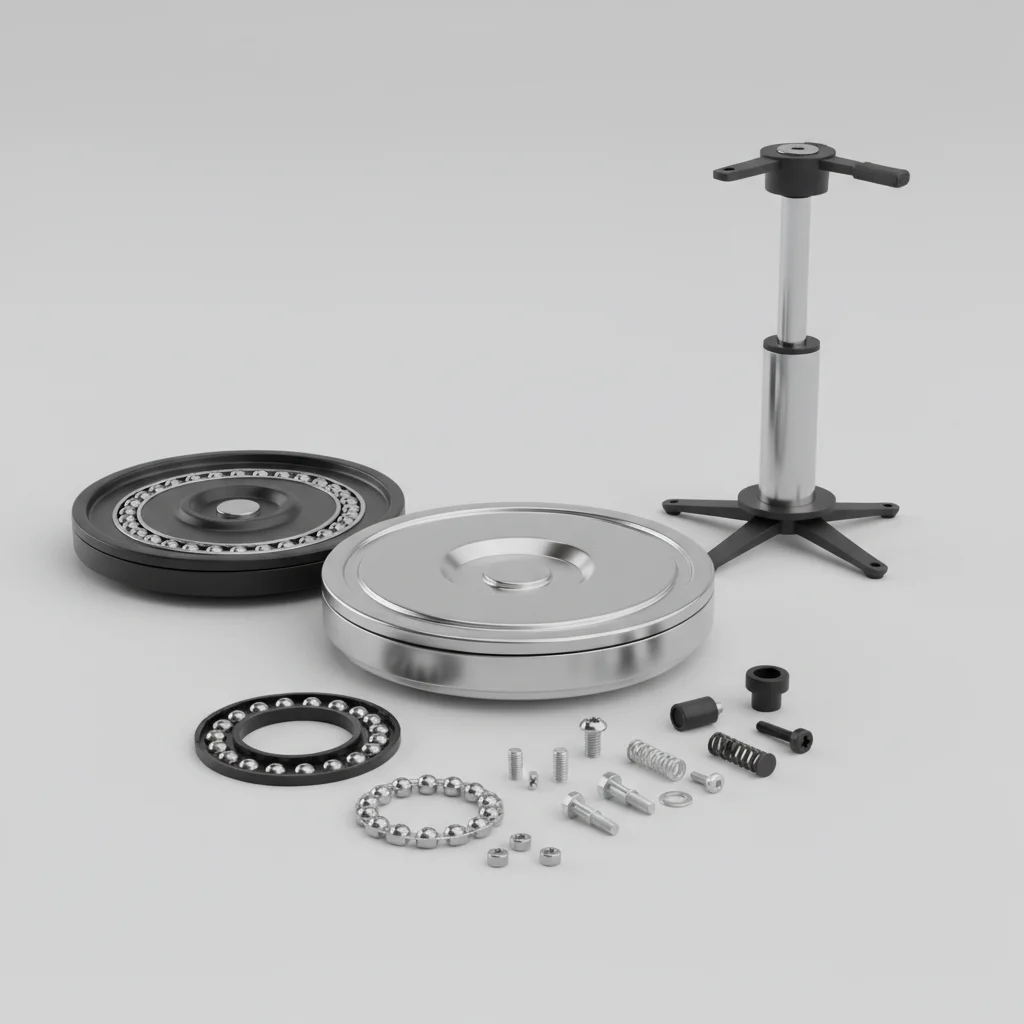
Bar stool swivel mechanisms are designed to provide convenience and flexibility, but their durability varies significantly based on type and construction. Generally, a well-maintained ball bearing swivel mechanism can last 5-10 years, while less robust plate swivels might show wear within 2-3 years. Understanding the different types and their common failure points can help you choose a more durable option and extend the life of your bar stools.
Types of Bar Stool Swivel Mechanisms
There are several common types of swivel mechanisms used in bar stools, each with distinct advantages and disadvantages regarding durability. The most prevalent are ball bearing swivels, plate swivels, and memory return swivels. Ball bearing swivels, often found in higher-quality stools, utilize a series of small ball bearings between two plates, allowing for smooth, low-friction rotation. This design distributes weight evenly and reduces stress on individual components, contributing to a longer lifespan. They are typically made from heavy-gauge steel, further enhancing their resilience against repeated use.
Plate swivels, on the other hand, consist of two metal plates that rub against each other, often with a nylon or plastic washer in between. While simpler and less expensive to produce, this friction-based design is more prone to wear and tear. The washers can degrade over time, leading to squeaking, stiffness, and eventual failure. Memory return swivels, a specialized type, incorporate a spring mechanism that automatically returns the seat to its original position. While convenient, the springs can weaken or break with frequent use, especially if the stool is regularly subjected to heavy loads or aggressive swiveling.
Common Issues and How to Address Them
Even the most durable swivel mechanisms can encounter issues over time. Squeaking is a common complaint, often caused by a lack of lubrication or worn-out washers in plate swivels. Applying a silicone-based lubricant or replacing the washers can often resolve this. Stiffness or difficulty swiveling usually indicates dirt accumulation, rust, or damaged ball bearings. Cleaning the mechanism thoroughly and applying fresh lubricant can help, but if ball bearings are damaged, a full replacement might be necessary. Wobbling is a more serious issue, often pointing to loose bolts, a bent swivel plate, or a compromised central shaft. Tightening all fasteners is the first step, but if the wobble persists, the mechanism itself may need to be replaced.
- Regularly inspect all bolts and fasteners for tightness.
- Clean the swivel mechanism every 6-12 months to remove dust and debris.
- Apply a silicone or lithium-based grease to moving parts to reduce friction.
- Avoid exceeding the stool’s stated weight capacity to prevent undue stress.
- Consider professional repair or replacement for severe wobbling or grinding.
Factors Influencing Swivel Mechanism Lifespan
|
Our Picks for the Best Bar Stool in 2026
As an Amazon Associate I earn from qualifying purchases.
|
||
| Num | Product | Action |
|---|---|---|
| 1 | FDW Metal Bar Stools Set of 4 Counter Height Bar Stools 24 Inches Industrial Bar Chairs Patio Stool Stackable Backless Stool Indoor Outdoor Metal Kitchen Stools Bar Chairs (Black, 24") |

|
| 2 | Bar Stools Set of 2, Tall Bar Stools with Backrest and Footrest, Counter Height Bar Chairs, Industrial Barstools with PU Leather Cushion, for Kitchen, Dining Room, Bar, Cafe (Black) KBS515B |
|
| 3 | 24 Inch Counter Height Bar Stools Set of 2, Compact Counter Stools for Small Spaces, Premium Faux Leather Barstools with Right-Sized Saddle Seat & Metal Legs, 15-Minute Easy Assembly, Black |
|
| 4 | Bar Stools, Set of 2 Bar Chairs with Backrest and Footrest, 26" Breakfast Chairs, Counter Stools for Bar, Living Room, Kitchen, and Dining Room, Rustic Brown and Black BAHR05101 |
|
| 5 | 29 Inch Bar Height Bar Stools Set of 2, 29" Barstools for Kitchen Island Counter, Backless Bonded Leather Bar Height Stools with Thick Saddle Seats & Heavy Duty Metal Base, Easy Assembly, Brown/Black |
|
| 6 | WORKPRO Heavy Duty Adjustable Hydraulic Shop Stool,Garage Bar Stool, 29in to 33.86in, 330-Pound Capacity, Black |
|
| 7 | HOOBRO Bar Stools, Set of 2 Bar Chairs, Counter Height Stools, Saddle Barstools with Curved Surface, 24.8 Inches, 2.4" Thick Upholstery, for Kitchen, Dining Room, Cafe Black BB10BY01 |
|
| 8 | Amazon Basics Solid Wood Saddle-Seat Counter Height Bar Stools for Kitchen Island with Footrest, 24-Inch Height, Walnut, Set of 2 |
|
| 9 | HOOBRO Bar Stools, Set of 2 Bar Chairs, 23.6 Inch Saddle Stools, Kitchen Counter Seat with Footrests, Industrial Barstools for Dining Room, Kitchen, Counter, Rustic Brown and Black BF02MD01 |
|
| 10 | Counter Height Bar Stools Set of 2, 24 Inch Barstools for Kitchen Counter, Kitchen Stools with Bonded Leather Saddle Seats & Heavy Duty Metal Legs, Easy Assembly, All Black |
|
Several factors contribute to how long a bar stool’s swivel mechanism will last. The quality of materials is paramount; mechanisms made from heavy-gauge steel and high-grade ball bearings will inherently outlast those made from thinner metals or plastic components. The frequency of use also plays a significant role; a stool used daily in a busy kitchen will experience more wear than one used occasionally in a guest area. User weight is another critical factor; consistently exceeding the stool’s weight capacity puts immense strain on the swivel, accelerating its degradation. Environmental conditions, such as high humidity, can lead to rust and corrosion, particularly in mechanisms not designed for outdoor use. Proper maintenance, including regular cleaning and lubrication, can significantly extend the life of any swivel mechanism.
When to Consider Replacement
Knowing when to replace a swivel mechanism can save you from buying an entirely new bar stool. If your stool exhibits persistent wobbling that cannot be fixed by tightening bolts, or if the swivel grinds, locks up, or makes loud metallic noises despite lubrication, it’s likely time for a replacement. A severely bent or cracked swivel plate is also a clear indicator. Fortunately, many bar stool swivel mechanisms are standardized and can be purchased separately. Replacing the mechanism is often a straightforward DIY task, requiring basic tools and a bit of patience. This can be a cost-effective solution compared to purchasing a new set of stools, especially if the rest of the stool’s frame and upholstery are still in good condition.Look for mechanisms made from heavy-duty steel with a high weight rating to ensure longevity.

My new kitchen island stools have memory return swivels, and I love how they always face forward. It keeps the kitchen looking tidy, which is a big plus for me. The mechanism feels pretty solid, and I’m hoping it holds up for a good while. So far, so good, no issues with the rotation.
After reading about the common failure points, I made sure to check the construction of the swivel mechanisms on the stools I was considering. I ended up with a set that had really robust ball bearing swivels, and the difference is night and day compared to my old ones. They feel incredibly stable and smooth, even with daily use.
We bought some bar stools with plate swivels a few years back, and they started getting really stiff after about 2 years. One of them even developed a slight lean. I wish I had known more about the different types before buying, as I definitely would have opted for something more durable. They still work, but it’s not ideal.
I’ve had my bar stools with ball bearing swivel mechanisms for about 7 years now, and they’re still going strong. I was a bit skeptical at first, but the smooth rotation has held up incredibly well. It’s definitely worth investing in the higher-quality options if you want them to last. No wobbles or squeaks yet!