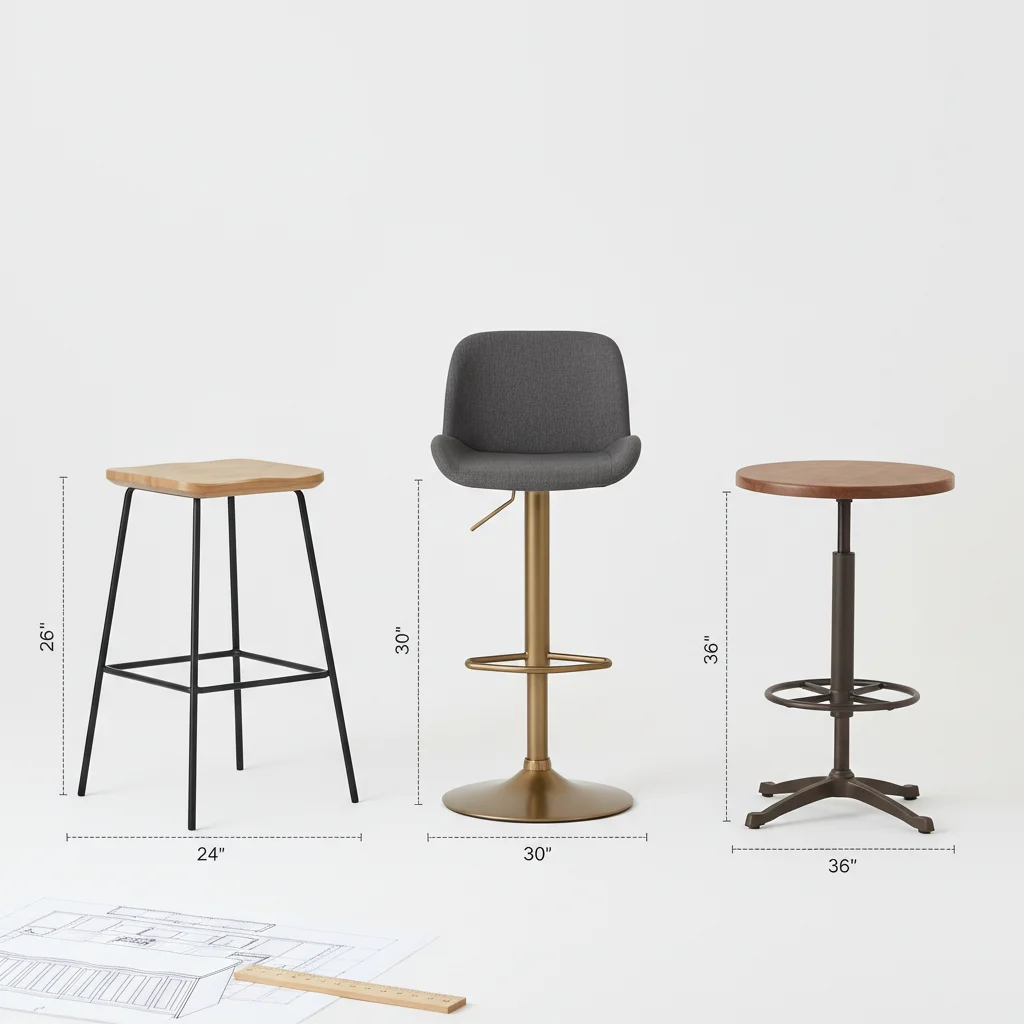
Choosing the correct bar stool height is crucial for comfort and aesthetics in your kitchen or bar area. The ideal height depends primarily on the counter or bar height you are pairing them with. Generally, there are three main bar stool heights to consider: counter height, bar height, and extra-tall bar height, each designed for specific surface dimensions.
Understanding Counter Height Stools
Counter height stools are typically designed for kitchen islands or counters that are around 34 to 36 inches high. These stools usually have a seat height ranging from 24 to 26 inches. This allows for a comfortable 9 to 12-inch gap between the top of the stool seat and the underside of the counter, which is the ergonomic sweet spot for dining and working. When selecting counter height stools, also consider the legroom for those sitting, ensuring there’s enough space for knees to fit comfortably under the counter without obstruction.
Exploring Bar Height Stools
Bar height stools are taller, intended for traditional bar counters that measure approximately 40 to 42 inches in height. The seat height for these stools typically falls between 28 and 30 inches. This provides the same comfortable 9 to 12-inch clearance as counter height stools, but for a higher surface. Bar height setups are common in home bars and some kitchen designs, offering a more elevated seating experience. It’s important to measure your bar precisely before committing to bar height stools to avoid an awkward fit.
Considering Extra-Tall Bar Stools
For exceptionally high counters or custom bar setups, extra-tall bar stools are available. These are less common but essential for surfaces exceeding 42 inches, sometimes reaching up to 48 inches. The seat height for extra-tall stools can range from 32 to 36 inches. These are often found in commercial settings or unique residential designs where standard bar heights are insufficient. Always double-check the specific measurements of your elevated surface to ensure a proper and safe fit for extra-tall options.
Factors Beyond Height: Swivel and Backrests
|
Our Picks for the Best Bar Stool in 2026
As an Amazon Associate I earn from qualifying purchases.
|
||
| Num | Product | Action |
|---|---|---|
| 1 | FDW Metal Bar Stools Set of 4 Counter Height Bar Stools 24 Inches Industrial Bar Chairs Patio Stool Stackable Backless Stool Indoor Outdoor Metal Kitchen Stools Bar Chairs (Black, 24") |

|
| 2 | HOOBRO Bar Stools, Set of 2 Bar Chairs, 23.6 Inch Saddle Stools, Kitchen Counter Seat with Footrests, Industrial Barstools for Dining Room, Kitchen, Counter, Rustic Brown and Black BF02MD01 |
|
| 3 | Amazon Basics Solid Wood Saddle-Seat Counter Height Bar Stools for Kitchen Island with Footrest, 24-Inch Height, Walnut, Set of 2 |
|
| 4 | HOOBRO Bar Stools, Set of 2 Bar Chairs, Counter Height Stools, Saddle Barstools with Curved Surface, 24.8 Inches, 2.4" Thick Upholstery, for Kitchen, Dining Room, Cafe Black BB10BY01 |
|
| 5 | 24 Inch Counter Height Bar Stools Set of 2, Compact Counter Stools for Small Spaces, Premium Faux Leather Barstools with Right-Sized Saddle Seat & Metal Legs, 15-Minute Easy Assembly, Black |
|
| 6 | 29 Inch Bar Height Bar Stools Set of 2, 29" Barstools for Kitchen Island Counter, Backless Bonded Leather Bar Height Stools with Thick Saddle Seats & Heavy Duty Metal Base, Easy Assembly, Brown/Black |
|
| 7 | Bar Stools, Set of 2 Bar Chairs with Backrest and Footrest, 26" Breakfast Chairs, Counter Stools for Bar, Living Room, Kitchen, and Dining Room, Rustic Brown and Black BAHR05101 |
|
| 8 | Counter Height Bar Stools Set of 2, 24 Inch Barstools for Kitchen Counter, Kitchen Stools with Bonded Leather Saddle Seats & Heavy Duty Metal Legs, Easy Assembly, All Black |
|
| 9 | Bar Stools Set of 2, Tall Bar Stools with Backrest and Footrest, Counter Height Bar Chairs, Industrial Barstools with PU Leather Cushion, for Kitchen, Dining Room, Bar, Cafe (Black) KBS515B |
|
| 10 | WORKPRO Heavy Duty Adjustable Hydraulic Shop Stool,Garage Bar Stool, 29in to 33.86in, 330-Pound Capacity, Black |
|
While height is paramount, other features like swivel mechanisms and backrests also influence comfort and functionality. Swivel bar stools offer flexibility, allowing users to turn easily without moving the entire stool, which is great for social settings. Backrests, whether full or low-profile, provide additional support and comfort, especially for longer periods of sitting. Consider how these features will integrate with your space and the primary use of the stools. For instance, a backless stool might be ideal for tucking away neatly under a counter, while a stool with a backrest offers more lounge-like comfort.
- Measure your counter or bar height accurately from the floor to the top surface.
- Subtract 9-12 inches from your counter height to determine the ideal seat height range.
- Consider the thickness of your counter and any apron or overhang that might reduce legroom.
- Account for the height of the individuals who will primarily use the stools.
- Think about the overall aesthetic and how the stool’s design integrates with your existing decor.
Adjustable Height Bar Stools: A Versatile Option
Adjustable height bar stools offer the ultimate flexibility, making them a popular choice for homes with varying counter heights or for accommodating different users. These stools typically feature a pneumatic lift mechanism, allowing the seat height to be easily adjusted within a specific range. This versatility means one set of stools can work for both counter and bar height surfaces, or simply provide personalized comfort for each person.When purchasing adjustable stools, pay attention to the minimum and maximum seat heights to ensure they cover your required range. They are particularly useful in multi-functional spaces or for families with children who might need different seating levels.
Final Considerations for Your Purchase
Before making your final decision, visualize the stools in your space. Consider the material, color, and style to ensure they complement your existing decor. Also, think about the number of stools you’ll need. A good rule of thumb is to allow 24 to 30 inches of counter space per stool to ensure comfortable elbow room.Don’t forget to check the base of the stools; some have wider bases that might interfere with movement or other furniture. By carefully considering all these factors, you can select bar stools that are not only the perfect height but also enhance the overall functionality and style of your home.

I was so confused about what height to get for my new kitchen island. This really helped me understand the difference between counter height and bar height stools. I ended up going with the 24-inch seat height for my 35-inch counter, and they fit perfectly! No more awkward knee bumping.
The guide was helpful for understanding the different heights. I got some counter height stools based on the 34-36 inch counter recommendation, but they feel a little too snug for my taller family members. Wish there was a bit more emphasis on considering legroom for different body types, not just the counter height itself.
Good info here. I always just guessed before, but the tip about the 9 to 12-inch gap between the seat and counter is a game-changer. My old stools were too low, and now I know why. I’m looking for some new extra-tall ones for my home bar, which is a bit higher than standard.
Finally, a clear explanation! I’ve been struggling to find the right stools for my breakfast bar. Knowing that counter height stools are typically 24-26 inches was exactly what I needed. My new stools arrived yesterday, and they look fantastic and are super comfortable.