Choosing the ideal bar stools for your home goes beyond mere seating; it’s about defining the very essence and functionality of your space. As an expert with over a decade in the bar stool industry, I understand that the decision between wood and metal can significantly influence the ambiance, comfort, and longevity of your seating arrangement. Whether you’re upgrading a kitchen island, furnishing a home bar, or creating a cozy breakfast nook, the material you select is paramount. This comprehensive guide will explore the distinct characteristics, advantages, and drawbacks of both wood and metal bar stools in 2026, helping you navigate the options to find the perfect match for your needs and aesthetic.
Exploring Popular Bar Stool Materials
When embarking on the quest for the perfect bar stool, understanding the foundational materials is the first step. While many styles exist—from backless to full-back, swivel to fixed—the core material largely dictates the stool’s overall character, durability, and maintenance requirements.
Wood Bar Stools: Timeless Warmth and Character
Wood bar stools embody a classic, inviting charm, instantly adding natural warmth and texture to any interior. Their versatility in design makes them a perennial favorite.
- Common Types: Hardwoods like oak, maple, and walnut are prized for their density and toughness, resisting dents and scratches better than softer woods such as pine.
- Finishes: Wood can be stained to highlight its natural grain, painted for a vibrant pop of color, or left in its natural state, offering a broad spectrum of customization.
- Aesthetic Appeal: Ideal for traditional, farmhouse, rustic, or even Scandinavian decor, wood stools lend a cozy and inviting atmosphere.
|
Our Picks for the Best Bar Stool in 2026
As an Amazon Associate I earn from qualifying purchases.
|
||
| Num | Product | Action |
|---|---|---|
| 1 | Bar Stools Set of 2, Tall Bar Stools with Backrest and Footrest, Counter Height Bar Chairs, Industrial Barstools with PU Leather Cushion, for Kitchen, Dining Room, Bar, Cafe (Black) KBS515B |

|
| 2 | HOOBRO Bar Stools, Set of 2 Bar Chairs, 23.6 Inch Saddle Stools, Kitchen Counter Seat with Footrests, Industrial Barstools for Dining Room, Kitchen, Counter, Rustic Brown and Black BF02MD01 |
|
| 3 | 24 Inch Counter Height Bar Stools Set of 2, Compact Counter Stools for Small Spaces, Premium Faux Leather Barstools with Right-Sized Saddle Seat & Metal Legs, 15-Minute Easy Assembly, Black |
|
| 4 | 29 Inch Bar Height Bar Stools Set of 2, 29" Barstools for Kitchen Island Counter, Backless Bonded Leather Bar Height Stools with Thick Saddle Seats & Heavy Duty Metal Base, Easy Assembly, Brown/Black |
|
| 5 | HOOBRO Bar Stools, Set of 2 Bar Chairs, Counter Height Stools, Saddle Barstools with Curved Surface, 24.8 Inches, 2.4" Thick Upholstery, for Kitchen, Dining Room, Cafe Black BB10BY01 |
|
| 6 | Bar Stools, Set of 2 Bar Chairs with Backrest and Footrest, 26" Breakfast Chairs, Counter Stools for Bar, Living Room, Kitchen, and Dining Room, Rustic Brown and Black BAHR05101 |
|
| 7 | Amazon Basics Solid Wood Saddle-Seat Counter Height Bar Stools for Kitchen Island with Footrest, 24-Inch Height, Walnut, Set of 2 |
|
| 8 | WORKPRO Heavy Duty Adjustable Hydraulic Shop Stool,Garage Bar Stool, 29in to 33.86in, 330-Pound Capacity, Black |
|
| 9 | Counter Height Bar Stools Set of 2, 24 Inch Barstools for Kitchen Counter, Kitchen Stools with Bonded Leather Saddle Seats & Heavy Duty Metal Legs, Easy Assembly, All Black |
|
| 10 | FDW Metal Bar Stools Set of 4 Counter Height Bar Stools 24 Inches Industrial Bar Chairs Patio Stool Stackable Backless Stool Indoor Outdoor Metal Kitchen Stools Bar Chairs (Black, 24") |
|
Metal Bar Stools: Sleek Sophistication and Resilience
Metal bar stools offer a distinct contrast, bringing a sleek, modern, or industrial edge to contemporary spaces. Their robust nature makes them a practical choice for high-traffic areas.
- Common Types: Steel and iron are known for exceptional strength and weight capacity, while aluminum provides a lighter, more portable option.
- Finishes: Available in a range of finishes, including matte black, brushed chrome, glossy black, and powder-coated options, they can effortlessly blend into various minimalist or industrial designs.
- Aesthetic Appeal: Perfect for modern, industrial, or minimalist interiors, metal stools introduce a clean, sophisticated, and sometimes edgy look.
Key Factors to Consider When Buying Bar Stools
Selecting the right bar stool involves more than just visual appeal. It requires a thoughtful evaluation of several practical aspects that impact comfort, longevity, and how well the stools integrate into your daily life.
Bar Height and Stool Height
The most crucial measurement is the relationship between your counter or bar height and the stool’s seat height. A comfortable gap of 9-13 inches (23-33 cm) between the tabletop and the stool seat is generally recommended for optimal ergonomics. Standard counter-height stools typically range from 24-26 inches (61-66 cm) for 36-inch (91 cm) counters, while bar-height stools are usually 28-30 inches (71-76 cm) for 40-42 inch (102-107 cm) bars. Extra-tall options are also available for specific setups.
Material Choice: Wood vs. Metal
The choice between wood and metal profoundly impacts several key performance indicators.
- Aesthetics: Wood offers natural warmth and character, fitting traditional, farmhouse, or rustic styles, with each piece boasting unique grain patterns. Metal, on the other hand, provides a sleek, modern, or industrial feel, suitable for contemporary and minimalist spaces with finishes like gunmetal or brushed chrome.
- Durability and Resistance: Metal bar stools are renowned for their exceptional durability and ability to withstand significant wear and tear, resisting dents, scratches, and impacts. They are less prone to moisture damage, which can cause wood to warp or crack. While high-quality hardwoods like beech are durable, they are more susceptible to dents and scratches over time, which some find adds character, while others prefer a pristine look requiring refinishing.
- Maintenance: Metal bar stools are generally low-maintenance, requiring only a simple wipe-down with a damp cloth to keep them clean. Wood stools, in contrast, need more care, including regular polishing, sealing, and prompt wiping of spills to prevent stains and moisture damage.
- Comfort: Wooden bar stools often provide a naturally cozier and more accommodating sitting experience, with many designs featuring seats that mold to the body’s curves. Wood is also a natural insulator, feeling warmer to the touch. Metal stools, while offering sturdy support, can feel cold without cushions and may not be as comfortable for extended periods without added padding.
- Weight and Portability: Wooden bar stools are typically heavier, offering greater stability, which is beneficial in homes with active children or for preventing easy tipping. Metal stools, particularly those made of aluminum, tend to be lighter and easier to move and reposition, ideal for flexible seating arrangements. However, some steel or iron metal stools can be quite heavy.
- Cost: The price of bar stools varies widely based on material, design, and brand. Metal bar stools, especially those made from powder-coated steel, can be more budget-friendly. High-quality hardwood stools often have a higher price tag due to craftsmanship and material cost, though simpler wooden options can be affordable.
> “For a truly busy family kitchen, metal often handles the day-to-day abuse with less fuss.” – Furniture Expert, StoolTopia
Style and Design Compatibility
Consider your existing decor. Do you lean towards rustic charm, sleek modernism, industrial chic, or classic elegance? Wood fits traditional and cozy spaces, while metal excels in contemporary, minimalist, and industrial settings.
Comfort and Support
While aesthetics are important, comfort for extended sitting is paramount. Look for features like contoured seats, backrests, and footrests. Upholstered or padded seats can significantly enhance comfort, especially for metal stools.
Durability and Load Capacity
Ensure the stools can comfortably support all users. A minimum weight capacity of 250 lbs is a good benchmark. Metal often provides superior resistance to impacts and heavy use, while hardwoods offer substantial longevity with proper care.
Indoor vs. Outdoor Use
If you need stools for an outdoor patio or semi-outdoor space, material choice is critical. Powder-coated aluminum or stainless steel are excellent choices for outdoor metal stools as they resist rust and UV damage. For wood, specific outdoor-grade materials like teak or cedar are necessary to prevent warping, cracking, and rotting.
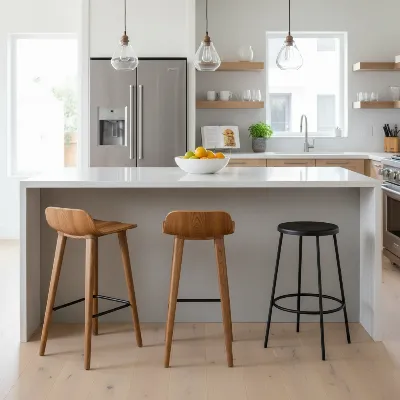 A cozy kitchen island with mixed wood and metal bar stools, showcasing a balance of warmth and modernity.
Comparison Chart: Wood vs. Metal Bar Stools
To simplify your decision, here’s a direct comparison of wood and metal bar stools based on key attributes:
| Feature | Wood Bar Stools | Metal Bar Stools |
|---|---|---|
| Aesthetic Appeal | Warm, classic, rustic, traditional, natural grain | Sleek, modern, industrial, minimalist, edgy |
| Durability | Durable (especially hardwoods), prone to dents/scratches | Highly durable, resistant to wear, tear, dents, and impacts |
| Maintenance | Higher (polishing, sealing, prompt spill cleanup) | Lower (easy to wipe clean) |
| Comfort | Naturally warmer, often more ergonomic, can be padded | Can feel cold, requires padding for extended comfort, sturdy |
| Cost | Varies, high-quality hardwoods often more expensive | Varies, generally more affordable, wide range of options |
| Weight | Generally heavier, more stable | Can be lighter (aluminum) or very heavy (steel/iron) |
| Portability | Less portable due to weight | More portable (especially aluminum) |
| Outdoor Use | Requires specific outdoor treatment (teak, cedar) | Better (powder-coated aluminum, stainless steel) if treated |
| Drawbacks | Susceptible to scratches, dents, warping; higher maintenance; heavier | Can feel cold; can rust if finish damaged; some are noisy; less natural comfort |
Your Guide to Buying the Perfect Bar Stool
With a clearer understanding of the materials, let’s outline a practical approach to making your final selection.
- Define Your Needs and Purpose: How often will the stools be used? For quick meals, or long conversations? Is durability for children/pets a priority?
- Measure Accurately: This cannot be overstated. Measure the height of your counter or bar from the floor to the underside. Allow for a comfortable distance for legs and movement.
- Harmonize with Your Space: Consider the existing materials, colors, and overall theme of your room. Wood complements natural and cozy palettes, while metal integrates well with contemporary and industrial designs.
- Prioritize Comfort and Stability: If possible, “try before you buy.” Pay attention to the seat’s depth, backrest support, and the presence of a footrest. For online purchases, read reviews focusing on comfort and stability. Ensure the stool feels sturdy and doesn’t wobble.
- Assess Maintenance Commitment: Be realistic about how much time you’re willing to dedicate to upkeep. If low maintenance is key, metal might be your best bet.
- Set a Budget: Bar stools are available across all price points. Establish your budget early to narrow down options without compromising quality.
- Check Reviews and Warranties: Reputable brands often provide warranties, indicating confidence in their product’s quality. User reviews can offer invaluable insights into real-world performance.
Bar Stools by Price Segment
The market offers bar stools for every budget, allowing you to find quality options regardless of your price range.
- Budget-Friendly (Under $100-$150 per stool): This segment often includes basic metal designs, such as powder-coated steel, or simpler wooden stools made from pine or engineered wood with basic finishes. These are excellent for those outfitting a large area on a tight budget or needing temporary seating.
- Mid-Range ($150-$300 per stool): Here, you’ll find higher-quality metal stools with more sophisticated finishes (like brushed nickel or chrome), and wooden stools crafted from more durable hardwoods with better joinery. Upholstered seats or backrests become more common in this category, offering enhanced comfort.
- Premium (Over $300 per stool): This segment features stools made from high-end hardwoods (e.g., solid oak, walnut), designer metal pieces, and often includes advanced features like complex swivel mechanisms, hydraulic height adjustment, or luxurious upholstery materials such as genuine leather. Custom-made options also fall into this price range, reflecting superior craftsmanship and materials.
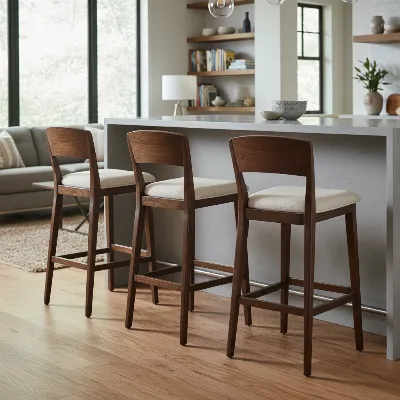 A set of three elegant wooden bar stools with backs at a rustic-modern kitchen counter, emphasizing natural materials and comfort.
Top Picks: Bar Stool Excellence in 2026
While specific models change annually, certain material attributes consistently define the “best” in various categories.
- Best for Ultimate Durability: For sheer resilience against daily wear and tear, metal bar stools, particularly those made from heavy-gauge steel or iron, are often unparalleled. They are built to withstand impacts and resist damage in high-traffic settings.
- Best for Warmth and Classic Aesthetics: If creating a cozy, inviting atmosphere is your priority, high-quality hardwood bar stools with their rich, natural grains and timeless designs are the top choice. They add character and a sense of enduring elegance.
- Best for Low Maintenance: Metal bar stools, especially those with powder-coated or chrome finishes, consistently win in the low-maintenance category. Their non-porous surfaces are easy to wipe clean, making spills a non-issue.
- Best for Comfort: While many appreciate the natural warmth of wood, stools (both wood and metal) with generous padding, ergonomic backrests, and well-placed footrests offer the most comfortable experience for prolonged sitting. Wooden stools can be naturally more comfortable, but a well-designed padded metal stool can match this comfort.
- Best for Outdoor Spaces: Treated metal bar stools, such as those made from powder-coated aluminum or stainless steel, are generally superior for outdoor use due to their inherent resistance to rust and weather elements.
Conclusion
Choosing between wood and metal bar stools in 2026 ultimately boils down to a thoughtful balance of your aesthetic preferences, functional needs, lifestyle, and budget. Wood bar stools offer a classic, warm, and inviting appeal, bringing natural beauty and comfort, albeit with a slightly higher maintenance commitment. Metal bar stools, on the other hand, provide a modern, industrial, and highly durable solution that is easy to maintain and often more budget-friendly. Both materials, when selected with care and quality in mind, can provide years of reliable and stylish seating. By considering the factors of durability, maintenance, comfort, cost, and how they integrate with your home’s unique style, you can confidently select the perfect bar stools to elevate your living space. Which material will you choose to create your ideal home ambiance?
Frequently Asked Questions
Are metal bar stools more durable than wooden bar stools?
Generally, yes, metal bar stools are often considered more durable, especially against impacts, spills, and heavy use. Metals like steel and iron are very strong and resistant to damage. While hardwoods are durable, they can be more susceptible to scratches and dents over time compared to metal.
Do wooden bar stools require a lot of maintenance?
Wooden bar stools typically require more maintenance than metal ones. They need regular cleaning, polishing, and sometimes sealing to protect the finish and prevent damage from moisture or scratches. Promptly wiping spills is crucial to avoid stains.
Which type of bar stool is more comfortable for long periods?
Wooden bar stools often provide a more naturally comfortable and warmer sitting experience due to the material’s properties and ergonomic designs. However, metal bar stools can be equally comfortable for extended periods if they feature ample padding, upholstered seats, and well-designed backrests.
Can I use metal or wood bar stools outdoors?
Yes, but with caveats. Metal bar stools designed for outdoor use often feature powder-coated aluminum or stainless steel to resist rust and UV damage. Wooden bar stools require specific outdoor-grade woods like teak or cedar and regular treatment to prevent warping, cracking, and rot when exposed to the elements.
Are metal bar stools always cheaper than wooden ones?
Not always, but metal bar stools generally offer more affordable options, especially for simpler designs and powder-coated steel. The price of wooden bar stools can vary widely, with high-quality hardwoods and intricate craftsmanship often leading to a higher price point than many metal alternatives.
How do I choose the right height for my bar stools?
To choose the right height, measure from the floor to the top of your counter or bar. For optimal comfort, aim for a gap of 9-13 inches (23-33 cm) between the seat of the stool and the underside of the counter. This allows enough legroom.
