Choosing the right bar stools for your kitchen counter is more than just picking a style; it’s about achieving perfect harmony in height, comfort, and spacing. Have you ever sat at a counter, knees knocking the underside, or found yourself awkwardly reaching for your plate? These common frustrations stem from incorrect measurements and a lack of understanding of bar stool ergonomics. As an Admin of ReviewFrat.com with over a decade of hands-on experience in bar stool mechanics and design, I’ve seen countless homes transformed by the right seating choices – and just as many hindered by the wrong ones. This comprehensive guide will walk you through the essential steps and expert tips to accurately measure your kitchen counter, ensuring you select bar stools that are not only stylish but also incredibly comfortable and functional for your space. Let’s dive into the world of perfect bar stool placement and make your kitchen a true hub of comfort and conversation.
Understanding Bar Stool Heights and Types
Before you even think about styles, understanding the different height categories of bar stools is paramount. The terms “counter height” and “bar height” are often used interchangeably, but they refer to specific ranges designed to complement different counter surfaces. Knowing these distinctions is the first step in finding your ideal seating.
Counter height stools are typically designed for kitchen islands or counters that measure around 34 to 36 inches from the floor to the top surface. These stools usually have a seat height between 24 and 26 inches. Bar height stools, on the other hand, are suitable for taller bar areas or pub tables, which generally stand 40 to 42 inches tall. For these, a stool with a seat height of 28 to 30 inches is usually the best fit. Beyond these, you might encounter extra-tall or spectator height stools, which cater to surfaces around 46 to 48 inches, requiring a seat height of approximately 34 inches. The key is to always focus on the seat height, not the overall height of the stool, as this is what directly impacts your comfort and legroom.
Essential Factors When Choosing Bar Stools
Selecting the perfect bar stools involves a thoughtful consideration of several factors beyond just height. Each element contributes to the overall functionality, aesthetic appeal, and long-term satisfaction with your purchase.
Counter Height and Stool Clearance
|
Our Picks for the Best Bar Stool in 2026
As an Amazon Associate I earn from qualifying purchases.
|
||
| Num | Product | Action |
|---|---|---|
| 1 | 24 Inch Counter Height Bar Stools Set of 2, Compact Counter Stools for Small Spaces, Premium Faux Leather Barstools with Right-Sized Saddle Seat & Metal Legs, 15-Minute Easy Assembly, Black |

|
| 2 | HOOBRO Bar Stools, Set of 2 Bar Chairs, 23.6 Inch Saddle Stools, Kitchen Counter Seat with Footrests, Industrial Barstools for Dining Room, Kitchen, Counter, Rustic Brown and Black BF02MD01 |
|
| 3 | FDW Metal Bar Stools Set of 4 Counter Height Bar Stools 24 Inches Industrial Bar Chairs Patio Stool Stackable Backless Stool Indoor Outdoor Metal Kitchen Stools Bar Chairs (Black, 24") |
|
| 4 | Bar Stools Set of 2, Tall Bar Stools with Backrest and Footrest, Counter Height Bar Chairs, Industrial Barstools with PU Leather Cushion, for Kitchen, Dining Room, Bar, Cafe (Black) KBS515B |
|
| 5 | 29 Inch Bar Height Bar Stools Set of 2, 29" Barstools for Kitchen Island Counter, Backless Bonded Leather Bar Height Stools with Thick Saddle Seats & Heavy Duty Metal Base, Easy Assembly, Brown/Black |
|
| 6 | WORKPRO Heavy Duty Adjustable Hydraulic Shop Stool,Garage Bar Stool, 29in to 33.86in, 330-Pound Capacity, Black |
|
| 7 | Amazon Basics Solid Wood Saddle-Seat Counter Height Bar Stools for Kitchen Island with Footrest, 24-Inch Height, Walnut, Set of 2 |
|
| 8 | Bar Stools, Set of 2 Bar Chairs with Backrest and Footrest, 26" Breakfast Chairs, Counter Stools for Bar, Living Room, Kitchen, and Dining Room, Rustic Brown and Black BAHR05101 |
|
| 9 | HOOBRO Bar Stools, Set of 2 Bar Chairs, Counter Height Stools, Saddle Barstools with Curved Surface, 24.8 Inches, 2.4" Thick Upholstery, for Kitchen, Dining Room, Cafe Black BB10BY01 |
|
| 10 | Counter Height Bar Stools Set of 2, 24 Inch Barstools for Kitchen Counter, Kitchen Stools with Bonded Leather Saddle Seats & Heavy Duty Metal Legs, Easy Assembly, All Black |
|
The most critical factor is the relationship between your counter’s height and the stool’s seat height. A general rule of thumb is to allow a clearance of 9 to 12 inches between the top of the stool seat and the underside of your counter. This gap ensures ample legroom and allows for comfortable movement, preventing cramped knees or awkward postures. Insufficient clearance can make sitting uncomfortable and difficult, while too much space can make dining or working at the counter feel disjointed.
Material and Durability
Bar stools come in a vast array of materials, each offering unique aesthetics and durability profiles. Wood stools lend a classic, warm feel, often seen in rustic or traditional settings, but may require more maintenance against spills. Metal stools, popular in industrial or modern designs, offer exceptional durability and are often easier to clean. Upholstered stools, in leather or fabric, provide enhanced comfort and can introduce texture and color, though they may be more susceptible to wear and stains. Consider your lifestyle, kitchen traffic, and desired maintenance level when making your choice.
Style and Design Integration
The style of your bar stools should seamlessly integrate with your existing kitchen decor. Do you prefer a sleek, minimalist look, or a more ornate, traditional design? Backless stools can offer a clean, unobtrusive line and tuck away neatly, ideal for smaller spaces or when you want to emphasize the counter itself. Stools with backs provide more support and comfort, encouraging longer periods of sitting. Swivel functionality adds convenience, allowing easy conversation, while armrests offer additional comfort but require more space.
Comfort and Support
A comfortable bar stool encourages lingering conversations and enjoyable meals. Test out different designs if possible. Look for ergonomic features such as contoured seats, adequate back support, and well-positioned footrests. Footrests are crucial for comfort, especially for shorter individuals, as they provide a place to rest your feet and reduce pressure on your legs. The width and depth of the seat also play a significant role in comfort.
Weight Capacity and Stability
Always check the weight capacity of the stools, especially if they will be used by individuals of varying sizes. A sturdy construction is vital for safety and longevity. Look for stools with solid bases and well-made joints. Backless stools or those with smaller footprints might feel less stable than those with a wider base.
Price Range
Bar stools are available across a wide price spectrum. Budget-friendly options often feature simpler designs and materials, while high-end stools boast premium materials, intricate craftsmanship, and advanced ergonomic features. Determine your budget early on, but remember that investing in quality can lead to greater durability and comfort in the long run.
How to Precisely Measure Your Kitchen Counter for Bar Stools
Accurate measurement is the cornerstone of choosing the right bar stools. Don’t rely on assumptions about “standard” sizes; every kitchen is unique. Follow these steps meticulously to ensure a perfect fit.
Step 1: Measure Counter Height
This is the most crucial measurement. Using a tape measure, start from the floor and measure straight up to the very top of your kitchen counter or bar surface. Do this in a few spots along the counter to ensure consistency, as floors or counters can sometimes be uneven. Record this measurement in inches.
> “The biggest mistake people make is guessing their counter height or assuming all ‘counter height’ stools will fit. Measure twice, buy once, and your knees will thank you.” – Sarah Jenkins, Interior Design Specialist
Step 2: Calculate Ideal Stool Seat Height
Once you have your counter height, subtract 9 to 12 inches to determine the ideal seat height for your bar stools. This range provides optimal legroom and comfort.
- Example: If your counter is 36 inches tall, your ideal seat height would be between 24 and 27 inches.
- Example: If your bar is 42 inches tall, your ideal seat height would be between 30 and 33 inches.
When shopping, look for stools where the stated seat height falls within this calculated range. Remember that adjustable height stools can offer more flexibility, especially if your counter is an unusual height or if different users have varying preferences.
Step 3: Measure Counter Width for Quantity
After determining the appropriate height, you need to figure out how many stools will comfortably fit. Measure the total usable length of your counter or bar area where you plan to place the stools.
Step 4: Determine Stool Spacing
To avoid a cramped feel, you’ll need adequate space for each person to sit and move comfortably.
- For standard stools (16-18 inches wide): Allow approximately 21-22 inches of counter space per stool.
- For wider stools (19-22 inches wide) or those with arms/swivel: Increase the allowance to 24-25 inches per stool, or even 8-10 inches between stools if they have arms or swivel.
- General Rule: A minimum of 6 inches between stools is recommended for standard designs, but 8-10 inches is more comfortable for stools with arms or swivel features.
Divide the total usable counter width by the space required per stool to get an estimate of how many stools you can fit. Always consider the widest part of the stool, especially if it has a flared base or arms.
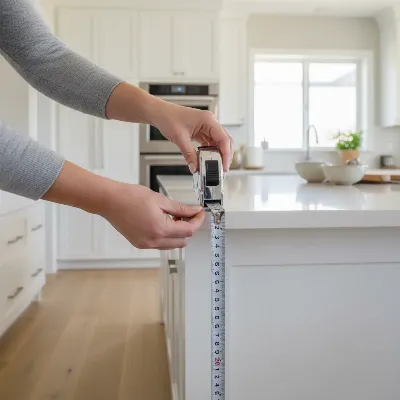 A person using a tape measure to accurately measure the height of a kitchen island counter for bar stools.
Choosing the Right Bar Stool Height: A Detailed Guide
Selecting the correct bar stool height is crucial for both comfort and aesthetics. Here’s a breakdown of common counter types and their corresponding stool heights.
Standard Counter Height (34-36 inches)
Most kitchen islands and standard countertops fall into this category.
- Ideal Stool Seat Height: 24-26 inches. These are often labeled as “counter stools.”
- Considerations: Perfect for casual dining and food prep areas where guests sit at the same level as the person standing in the kitchen.
Bar Height (40-42 inches)
These are typically found in dedicated home bars or taller breakfast bars.
- Ideal Stool Seat Height: 28-30 inches. These are the traditional “bar stools.”
- Considerations: Creates a more formal bar-like atmosphere. Ensure enough ceiling clearance if you have very tall bar stools.
Spectator/Extra Tall Height (46-48 inches)
Less common, these heights are for very tall custom bars or specific pub tables.
- Ideal Stool Seat Height: 34 inches. Often called “spectator stools” or “extra tall bar stools.”
- Considerations: These stools are quite high, so ensure your guests are comfortable with them and that the overall proportion works in your space.
Always double-check your own counter’s measurement, as custom installations can vary from standard heights.
Determining the Number of Bar Stools Needed
The number of bar stools you can comfortably fit depends primarily on the width of your counter and the width of the stools themselves. A good general guideline is to allow approximately 21-25 inches of linear counter space per stool.
For instance, if your counter is 80 inches long and you’re considering stools that are 18 inches wide:
- Allow 24 inches per stool (18-inch stool + 6 inches spacing).
- 80 inches / 24 inches/stool = 3.33 stools.
This means you could comfortably fit three stools, with a little extra room to spare. Always round down if the number isn’t a whole integer to avoid overcrowding. If your stools have arms or are particularly wide, increase the space per stool to 28-30 inches to ensure elbow room and ease of getting in and out.
Tips for a Perfect Fit and Common Mistakes to Avoid
Ensuring your bar stools are the perfect fit goes beyond just measurements; it involves anticipating real-world usage and avoiding common pitfalls.
Common Mistakes:
- Ignoring Seat Height: As mentioned, focusing on overall stool height instead of seat height is a frequent error. Always prioritize the seat height for comfort and proper clearance.
- Underestimating Spacing: Cramming too many stools into a small space leads to discomfort and makes the area feel cluttered. Give people room to breathe and maneuver.
- Forgetting Obstructions: Account for any overhangs, cabinet handles, or structural elements under the counter that might interfere with the stool or a person’s legs.
- Not Considering Footrests: Footrests are not just for aesthetics; they are crucial for comfort, especially during extended sitting. Ensure the footrest is at a comfortable height relative to the seat.
Tips for a Perfect Fit:
- Consider Adjustable Stools: If you have multiple users of varying heights or an unusually sized counter, adjustable height stools offer excellent versatility.
- Think About Swivel and Arms: Swivel stools are great for engaging in conversation, but they require more elbow room when spinning. Stools with arms provide extra comfort but also demand more space, both on the counter’s length and potentially under the counter if they need to tuck in.
- Visualize with Mock-ups: Before purchasing, you can use cardboard cutouts or even painter’s tape on the floor to visualize the footprint and spacing of the stools.
- Test Before You Buy: If possible, sit on similar stools in a showroom to gauge comfort, back support, and the feel of different materials.
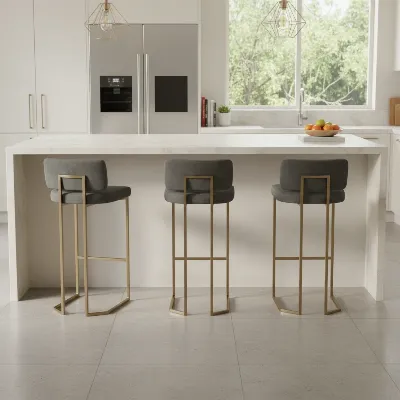 A clean, modern kitchen island with three perfectly spaced bar stools, showcasing adequate room between each for comfortable seating.
Bar Stool Styles and Materials
The style and material of your bar stools contribute significantly to the overall ambiance of your kitchen or bar area.
Popular Styles:
- Modern/Contemporary: Often feature sleek lines, metallic finishes, and minimalist designs.
- Farmhouse/Rustic: Characterized by natural wood, distressed finishes, and sometimes industrial metal accents.
- Traditional: Emphasizes classic forms, often with ornate detailing, rich wood tones, and upholstered seats.
- Industrial: Combines raw materials like metal and wood, often with a utilitarian, rugged aesthetic.
Common Materials:
- Wood: Timeless and versatile, offering warmth and natural beauty. Available in various finishes and wood types.
- Metal: Durable, easy to clean, and provides a modern or industrial look. Options include steel, iron, and aluminum.
- Upholstered: Offers superior comfort and a chance to introduce color and texture with fabrics like leather, velvet, or linen.
- Plastic/Acrylic: Lightweight, easy to clean, and available in a wide range of colors, perfect for contemporary or playful spaces.
Choosing the right combination of style and material ensures your bar stools are not just functional but also a true reflection of your personal taste and home decor.
Conclusion
Finding the perfect bar stools for your kitchen counter is a journey that intertwines precise measurements with personal style and comfort. By accurately measuring your counter’s height, calculating the ideal seat clearance of 9-12 inches, and determining the appropriate spacing for each stool, you lay the foundation for a functional and inviting seating area. Remember to consider the practical aspects of material, durability, and the crucial role of footrests, ensuring that your final choice provides both aesthetic appeal and ergonomic support. Don’t fall into the trap of assuming standard sizes; a few careful measurements will save you from future discomfort and regret. With these expert tips, you’re now equipped to confidently navigate the world of bar stools and create a kitchen space that beckons everyone to pull up a seat. What unique design elements will you incorporate to make your bar stool selection truly your own?
Frequently Asked Questions
What is the standard height for a kitchen counter?
The standard height for a kitchen counter typically ranges from 34 to 36 inches from the floor to the top surface. This height is designed to be comfortable for most adults when performing kitchen tasks.
How much space should be between a bar stool seat and the counter?
For optimal comfort and legroom, there should be a clearance of 9 to 12 inches between the top of the bar stool’s seat and the underside of your kitchen counter or bar.
Can I use bar height stools at a counter height island?
No, using bar height stools (typically 28-30 inch seat height) at a counter height island (34-36 inches tall) would result in insufficient legroom, making it very uncomfortable to sit. Always match stool height to counter height.
How do I know how many bar stools will fit my counter?
Measure the total usable width of your counter. Then, allow approximately 21-25 inches of linear space for each standard stool (more for wider or armed stools). Divide the total width by this per-stool allowance to estimate the number of stools.
Are backless bar stools comfortable for long periods?
Backless bar stools offer a sleek look and tuck away neatly, but they generally provide less support than stools with backs. For long periods of sitting, stools with backs and footrests are typically more comfortable.
What if my counter height is not standard?
If your counter height falls between standard ranges (e.g., 38 inches), consider adjustable height bar stools. These offer flexibility to find the perfect seating height for your unique counter and accommodate different users.
Should I consider footrests when buying bar stools?
Yes, footrests are a critical feature for comfort, especially for extended sitting. They provide support for your feet, reducing pressure on your legs and improving posture. Ensure the footrest is at a comfortable distance from the seat.
